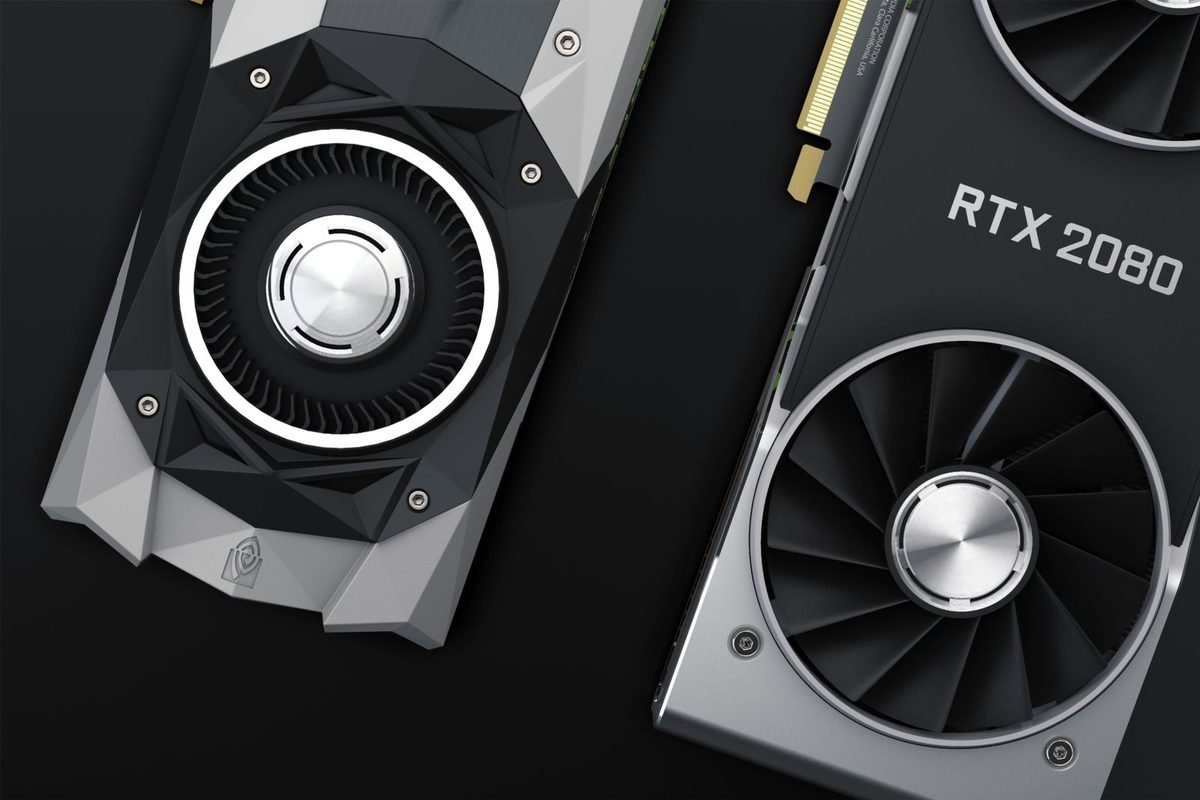
What the RTX 5090D is
The name causes confusion, so a clear definition helps.
The basic idea
NVIDIA sells some products in China under a D suffix. The RTX 4090D was the earlier example, and the RTX 5090D follows the same pattern. The D variants exist so that NVIDIA can sell flagship graphics cards in a market subject to United States export controls on advanced AI hardware. These controls restrict certain levels of AI compute performance, and the D cards are tuned to fit under the limits.
Relationship to the RTX 5090
The RTX 5090 uses the GB202 die with 170 SMs, 21,760 CUDA cores, 32 GB of GDDR7 and a 575 W rating, as the model guide lists. The 5090D belongs to the same Blackwell family. NVIDIA's public description is that it targets gaming and creative users in China, with the restrictions affecting AI compute capability rather than gaming ability.
A note on sources
Detailed specifications of the D variant, including exact clocks and which functions are limited, appear in NVIDIA's own product pages and in press coverage. Check the current official page before relying on any number, because figures can change and this article does not reproduce specifications that it cannot verify here.
Why export controls matter
Understanding the context explains the product.
The policy background
The United States has restricted exports of advanced AI accelerators to some countries, measured by metrics such as total processing performance. Consumer GPUs with high AI throughput can approach those thresholds, so manufacturers produce modified versions for affected markets.
How a variant is created
A manufacturer can reduce AI-relevant capability by limiting certain data formats or throughput through firmware or hardware configuration. Gaming workloads use different paths, so frame rates can remain close. Reports on the earlier 4090D suggested a small gaming gap, and independent testing for the 5090D should be read for current evidence.
What this means for consumers
The D variant offers a product that stays legal to sell in China while keeping most of the gaming value. For players elsewhere, it is a curiosity, because the standard card is available.
| Aspect | RTX 5090 | RTX 5090D (as reported) |
|---|---|---|
| Intended market | Global retail | China |
| Architecture family | Blackwell GB202 | Blackwell, same family |
| Gaming performance | Reference | Reported as close |
| AI compute | Full | Reported as reduced |
| Availability in the UK | Standard retail | Not a normal retail product |

Gaming performance and features
For players, the key question is whether they lose anything.
Rasterised and ray-traced games
Gaming draws on shaders, RT cores and memory bandwidth, which are not the target of export-control limits. Press and manufacturer statements describe gaming performance as comparable, although independent tests should confirm it for each game.
DLSS 4 and Multi Frame Generation
The D variants support the Blackwell feature set that gamers care about. Features such as DLSS, Reflex and the NVIDIA App work as on the standard card, according to NVIDIA's descriptions. The guide to DLSS 4 explains the technology.
Memory and bandwidth
NVIDIA lists memory type and capacity in its specifications. Check the page for the D model, because capacity and bandwidth are important for 4K gaming.
Creative and AI work
The reported limitation is aimed at AI compute. Creative users who rely on Tensor-core throughput for local AI models may notice a difference, while video editing and 3D rendering depend more on other paths.
How to verify a listing before you buy
Careful checks protect your money.
Read the full model name
Product titles should say RTX 5090 or RTX 5090D explicitly. Be wary of listings that blur the two, or that omit the model suffix in the title but show it in a photo.
Check the seller
Buy from established UK retailers with clear returns. For marketplace sellers, read ratings, location and return terms. A very low price for a flagship card is a red flag.
Look at the packaging and specification
Genuine products carry model numbers and serial numbers. Compare with the manufacturer's site. Photographs of the actual item are better than stock images.
Confirm the warranty
Ask how the warranty works in the UK. An import may have no UK service, and a manufacturer may refuse a claim for a card sold for another region.
Consumer rights
UK consumer law gives rights when buying from a trader, but private sales and overseas sellers complicate them. Pay by a method that offers buyer protection.
| Check | Why it matters |
|---|---|
| Exact model name | Avoids buying the wrong variant |
| Seller reputation | Reduces fraud risk |
| Warranty terms | Determines repair options |
| Return window | Gives time to test |
| Payment method | Provides recourse |
Drivers and software support
Driver packages
NVIDIA's drivers for GeForce cards cover the product family, and the NVIDIA App provides updates. Check that your model is listed in the release notes. If a driver does not recognise a card, do not use unofficial modifications.
Region-specific features
Some regional variants may have different default configurations. Rely on NVIDIA's documentation for specifics.
Updates and support
Official support is tied to the region of sale. Contacting support about a grey-market card may not be possible.
Avoid unofficial firmware
Do not flash firmware from unofficial sources to change the card's limits. It risks damage and invalidates the warranty.

Export controls in plain language
What is being controlled
Regulators set limits on the computing performance of chips that could be used in advanced AI systems. A threshold is defined by metrics that combine data precision and throughput. Consumer GPUs that exceed it fall under restrictions for exports to specified countries.
How companies respond
Companies design variants that remain below thresholds. They do this by reducing particular capabilities such as throughput for certain number formats or interconnect speeds, while preserving other features.
Why policy changes matter
Rules evolve, so the specifications and availability of such variants can change. Treat any article, including this one, as a snapshot, and consult official sources for the latest position.
Impact on gamers
For gamers, the effect is small. The primary effect is regional availability and the existence of variants with different names.
Comparing the D approach with other regional products
The 4090D precedent
The RTX 4090D introduced the pattern. It was sold in China with slightly reduced specifications compared with the RTX 4090. Reviews at the time described a modest gaming difference.
Other products
Some professional and data-centre GPUs have China-specific versions. Consumer D variants follow similar logic.
Naming
D does not signify a quality tier. A card named with D is a regional product, not a different class of gaming performance.
What the standard RTX 5090 offers UK buyers
Core specifications
The RTX 5090 has 170 SMs, 21,760 CUDA cores, 32 GB of GDDR7 on a 512-bit bus, 1,792 GB/s of bandwidth and a 575 W rating. It sits at the top of the site's relative chart, with a score of 100.
Features
It supports DLSS 4 with Multi Frame Generation, Ray Reconstruction and Reflex. See the guide to Multi Frame Generation for details.
Power and cooling
It demands a strong supply and good airflow, as the real-world power consumption guide explains.
Value
It is the only card in the family with 32 GB, so it suits heavy 4K, local AI and creative workloads. For 1440p, a smaller card is enough, as the RTX 5070 Ti versus RTX 5080 comparison shows.
Where to start
Read the site's RTX 5090 pages for detailed specifications, then compare prices at UK retailers.
Understanding what AI compute limits do and do not affect
The phrase reduced AI compute can mislead, so be precise.
Where AI compute matters in games
DLSS Super Resolution, Ray Reconstruction and Frame Generation run on Tensor cores. These workloads are real-time and relatively light compared with training large models. Export thresholds are aimed at total throughput for AI training and inference at scale, so consumer features can function while the card stays under the limit. NVIDIA's description of the D variants is that gaming features remain.
Where it matters for creators
Local large language models, image generation and some video effects rely on Tensor throughput. If a card has reduced throughput in some precision formats, those tasks may run slower. The exact impact depends on the software and data type.
Where it does not matter
Rasterisation, ray tracing and video playback do not depend on the restricted paths in the same way.
How to check for yourself
If you ever consider a D card, look for independent benchmarks in the tasks you care about, such as a game suite and an AI inference test. Do not rely on a general claim.
Memory and the 32 GB question
Why capacity matters
The standard RTX 5090 has 32 GB, which lets it hold large textures, big scenes and AI models of several billion parameters. A 7-billion-parameter model at 4-bit precision needs about 3.5 GB of weights, a 30-billion model about 15 GB, and a 70-billion model about 35 GB, which exceeds 32 GB without offloading. These figures ignore context memory.
Checking the D model's memory
Look up the memory on NVIDIA's page for the D variant. Memory is a key reason to buy a flagship, so it is worth confirming.
Bandwidth
Bandwidth affects both games and AI token generation. The standard card offers 1,792 GB/s over a 512-bit bus.
Risks of grey-market flagship purchases
Fraud and counterfeits
High-value cards attract scammers. Reports of empty boxes, relabelled lower-tier cards and cloned listings exist. Insist on traceable payment and genuine retailers.
Customs and VAT
Imports may incur customs duties and VAT. A low headline price can rise at delivery.
Warranty gaps
A card sold for another market may carry a warranty that is not valid in the UK. Repair would then be at your own cost.
Resale difficulties
A non-standard variant is harder to resell, and buyers may pay less.
Safer routes
Buy new from UK retailers. If you want a deal, look for official promotions, open-box units with full warranty or reputable refurbished stock.
How to read a specification sheet for any variant
A systematic reading prevents mistakes.
Identify the die and the configuration
Check the GPU name, such as GB202, and the number of enabled SMs or CUDA cores. Variants can differ in enabled units. The numbers on the standard RTX 5090 are 170 SMs and 21,760 CUDA cores.
Compare memory
Read capacity, type, bus width and data rate. Together they set bandwidth, which equals bus width in bytes times data rate.
Check clocks and power
Boost clock and total graphics power set the speed and heat. A lower power rating usually means lower performance in demanding games.
Look at features
DLSS, ray tracing, encoders and display outputs should be listed. Differences in any of these affect your use.
Cross-check
Compare the manufacturer's page with retailer listings. Mismatches deserve questions.
| Spec line | Why it matters |
|---|---|
| GPU and SM count | Compute capacity |
| Memory type and size | Texture capacity and AI headroom |
| Bus width and data rate | Bandwidth |
| TGP | Power supply and cooling |
| Outputs | Monitor compatibility |
The bigger picture of the Blackwell lineup
From GB202 downward
The RTX 5090 uses GB202. The RTX 5080 and RTX 5070 Ti use GB203, and the RTX 5070 uses GB205. The RTX 5060 Ti and RTX 5060 use GB206, and the RTX 5050 uses GB207. The article on GPU chips explains the die ladder.
Why regional variants appear at the top
The highest-performance parts are the ones most likely to hit regulatory thresholds. That is why D variants have been limited to the flagship, so far.
Where to find the facts
NVIDIA's product pages list specifications for each model. Use them for the final word.
Gaming performance expectations at the top of the range
Even without exact numbers for a regional variant, the flagship tier follows predictable patterns.
4K and beyond
The flagship class targets 4K at high refresh rates and handles heavy ray tracing with DLSS. At 1440p, many games hit processor limits before the card runs out of headroom, which is why the benefit of a flagship shrinks at lower resolutions. The guide to CPU and system bottlenecks explains how to diagnose this.
Frame generation at the top
With Multi Frame Generation, a flagship can fill very high refresh rate displays from a healthy base. The result depends on game support and the monitor.
Competitive play
For competitive games, the flagship's extra headroom matters less than a fast processor, a high-refresh monitor and low latency settings.
Comparing against lower tiers
On the site's chart, the RTX 5080 scores 66 and the RTX 5070 Ti 57 against 100 for the RTX 5090. A buyer who wants the best price per frame will often pick a lower tier. The RTX 5070 Ti versus RTX 5080 article demonstrates the cost-per-point method.
Power and cooling reminders for any flagship
Supply and cable
A flagship needs a quality supply and a securely seated cable. The power consumption guide provides numbers and safety advice.
Case and airflow
Large cards need large cases. Check dimensions and airflow before you buy.
Noise and heat
High power means high heat. Plan for a room that can handle it, and consider an undervolt.
Tuning options
Undervolting and power limits apply to any high-end card. The method in the RTX 5080 undervolt guide carries over.
Common misconceptions
Misconception: D means a cut-down gaming card
The name is regional. Reports describe the gaming differences as small, though independent tests should confirm.
Misconception: any RTX 5090D listing is a bargain
Price differences usually reflect risk, such as no UK warranty or import costs.
Misconception: the standard RTX 5090 has the same restriction
The standard card is not described as having the restriction. Check official specifications.
Misconception: drivers are the same for everyone
Drivers cover product families, but support terms depend on the region of sale.
Practical steps for a UK buyer
Step one: decide the tier you need
Choose by resolution, refresh rate and budget. Do not default to the flagship.
Step two: set a budget
Include supply and case upgrades.
Step three: compare retailers
Check stock, price, delivery and returns.
Step four: check the details
Read the model name, warranty and specifications on the product page.
Step five: pay safely
Use a method with buyer protection.
Step six: test the card
On arrival, install the driver, run a game for an hour and check temperatures and stability within the return window.
A timeline view of regional GPU variants
Earlier generations
Before the RTX 40 series, NVIDIA sold products worldwide with few regional changes. The RTX 4090D appeared after export rules tightened and set the pattern for later models.
The RTX 50 series
With Blackwell, the same logic applies to the flagship. The D suffix identifies the regional card. Other models in the family, from the RTX 5080 downward, are not generally described as needing such variants.
Future possibilities
Policies can change, and so can product lines. A new rule could produce new variants or remove the need for them. Follow official announcements.
What stays constant
The standard retail line for the UK remains the same: RTX 5090, RTX 5080, RTX 5070 Ti, RTX 5070, RTX 5060 Ti, RTX 5060 and RTX 5050.
How reviewers treat regional variants
Separate coverage
Reviewers who obtain a D sample test it as its own product, comparing it with the standard card. Their charts label the model.
Testing in AI tasks
Because the limitation affects AI compute, thorough reviews include an AI benchmark alongside games.
Reading carefully
Check whether a chart shows the D card or the standard card. Mixing them leads to wrong conclusions.
Ethics and legality of buying imports
Legal considerations
Buying a card from overseas is legal in the UK, though you are responsible for customs and VAT. Selling in breach of a manufacturer's regional agreement is a matter between the seller and manufacturer.
Your risk
The main risks are warranty and support, as covered above.
The responsible approach
Choose products intended for your market. It simplifies support and protects you.
Alternatives for gamers who want flagship-class performance
RTX 5080
At 66 on the chart, the RTX 5080 is 34 percent below the flagship in score. It has 16 GB and a 360 W rating, and it is far easier to power and cool.
RTX 5070 Ti
At 57 on the chart, with 16 GB and 300 W, it offers strong 4K performance with DLSS at a lower price. The RTX 5070 Ti complete guide explains.
Used previous-generation flagships
A used RTX 4090 scores 76 on the chart. It may offer good value, but check condition and warranty.
| Option | Chart score | VRAM | Rating |
|---|---|---|---|
| RTX 5090 | 100 | 32 GB | 575 W |
| RTX 4090 (used) | 76 | 24 GB | Check listing |
| RTX 5080 | 66 | 16 GB | 360 W |
| RTX 5070 Ti | 57 | 16 GB | 300 W |
A buyer's decision flow
Step one: do you need a flagship?
If your monitor is 1440p or you play with DLSS at 4K, probably not. Move to the RTX 5080 or RTX 5070 Ti.
Step two: do you need 32 GB?
If you run large AI models, edit heavy timelines or play with extreme texture mods, yes. Otherwise 16 GB suffices.
Step three: can your system host it?
Check supply, case and cooling. If not, budget for upgrades.
Step four: where will you buy it?
Choose a UK retailer with returns and a clear warranty.
Step five: confirm the model
Read the full name on the listing, and confirm on arrival.
Frequently confused terms
D versus Ti versus Super
The Ti and Super suffixes mark performance tiers within a global lineup. D marks a regional variant. Do not read it as a step up or down the ladder.
GB202 versus RTX 5090
GB202 is the silicon design. RTX 5090 is the product built from it. A variant can use the same silicon with a different configuration.
TGP versus peak draw
TGP is the target board power. Peak draw can briefly exceed it, which is why supply margin matters.
Export control versus tariff
Export controls limit what a company may sell abroad. Tariffs are taxes on imports. They are different tools with different effects on price and availability.
Why precise language matters
Misusing these terms spreads confusion in forum posts and listings. Use the exact names when you search or ask for support.
Keeping your information current
Hardware news moves quickly, and details about regional variants are especially prone to change. Before you act on any claim, check three things: the date of the source, whether it comes from NVIDIA or an independent tester, and whether it refers to the exact model you are considering. A two-minute check of NVIDIA's product page and a recent review from an established outlet will tell you more than any forum thread. Save the links you rely on, so that you can show them to a retailer or support team if a dispute arises later.
Takeaway for readers outside China
The 5090D is a footnote to your buying decision, not a chapter. It shows how policy shapes hardware, and it explains why you might see the name in reviews, news and the occasional listing. Treat it as background knowledge, keep your attention on the standard cards sold with a UK warranty, and spend your research time on the questions that change your experience: resolution, refresh rate, memory, power and price. If a clear need for flagship hardware emerges, the standard RTX 5090 is the straightforward route.
What this means for your next upgrade
If you are shopping for a high-end card, begin with your target resolution and refresh rate, then pick the lowest tier that meets it. If the standard RTX 5090 fits your needs, plan the supply and case. If you meet a listing for a regional variant, treat it with the caution described here. And if you prefer a calmer purchase, the RTX 5080 and RTX 5070 Ti deliver excellent experiences at lower cost and lower power, with fewer questions about support.
Questions to ask yourself
Do I need the flagship at all?
If you play at 1440p or at 4K with DLSS, a cheaper card may do. The RTX 5080 and RTX 5070 Ti are strong options.
Am I tempted by a low price?
If a flagship is cheap, find out why. Variants, imports, used units and scams all produce low prices.
Do I need the warranty?
For a high-value part, yes. Prefer purchases with clear UK warranty terms.
Reading reviews from other regions
Compare like with like
Reviews from China may test the 5090D and cite results that do not apply to the standard card. Read which model was tested.
Beware of mislabelled data
Aggregators sometimes mix variants. Cross-check with a second source.
Use the chart cautiously
The site's relative performance chart refers to the standard card. A D variant could score slightly differently.
Staying informed
Official sources
NVIDIA's product pages and press releases give the authoritative position. Check them when you see a new name.
Reputable press
Established hardware outlets run tests and report on the differences between variants.
Community discussion
Forums provide leads but can include rumours. Treat them as hints and verify.
Further reading
For more on flagship hardware, read the comparison of the ASUS TUF and ROG Astral RTX 5090 models and the analysis of whether the RTX 5090 has enough VRAM and horsepower for 4K. Both help you judge partner designs, memory capacity and real-world value before you commit to a high-end purchase, and they give you a sense of what a standard UK retail card offers compared with imported variants. Use them together with the official NVIDIA specification page when you check a listing.
Summary
The RTX 5090D is a China-market variant of the RTX 5090, created to comply with export controls by limiting AI compute while keeping gaming performance close. It is not a normal UK retail product, and UK buyers should look for the standard RTX 5090 with a clear warranty. Verify model names, sellers and return terms, avoid unofficial firmware, and read reviews carefully so that you know which variant was tested. For a full picture of the flagship, see the guides to its power consumption and the RTX 50 series lineup.
Frequently asked questions about the RTX 5090D
What does the D in RTX 5090D stand for?
NVIDIA uses D to mark variants designed for the Chinese market. The company has not framed it as a performance grade. The suffix signals a product built to comply with export rules for that region. Check NVIDIA's product page and recent coverage for current details.
Is the RTX 5090D slower than the RTX 5090?
Reports describe gaming performance as close to the standard card, with the main limitation affecting AI compute. Independent testing is the best guide. For the exact numbers, check current reviews and NVIDIA's official specification page. Always confirm which model a review actually tested.
Can I buy the RTX 5090D in the UK?
It is not a normal UK retail product. Some units may appear through grey-market sellers. Buyers should be careful about warranty, support and legitimacy, and should prefer the standard RTX 5090 from reputable retailers. Always check the seller's returns policy and your consumer rights.
Does the RTX 5090D support DLSS 4?
NVIDIA describes the Blackwell feature set, including DLSS 4, as available across the family. Confirm on the product page for the specific model. The standard RTX 5090 certainly supports it. The standard RTX 5090 certainly supports it, so confirm the D variant on the official product page before you buy.
Why does NVIDIA make D variants?
Export controls limit the sale of high-end AI hardware to certain markets. The D variants let NVIDIA continue to sell flagship gaming graphics cards there while meeting the rules. The suffix identifies a regional product, not a lower tier, and policies may change over time.
Should UK gamers care about the 5090D?
Mostly as a point of knowledge. It matters if you see a listing for one and wonder what it is, or if you compare reviews from other regions. For purchase, choose a standard card with a clear warranty. Check NVIDIA's product page for current details.