Can my PC run it?
Test your own GPU, CPU and settings on this title
Looking at Abiotic Factor, an Action, Adventure and RPG game from Deep Field Games. We work through the official specs, estimate frame rates on 28 GPUs, size up the VRAM and processor needs and suggest settings and laptop options.

How this game ranks among 937 modelled titles, and what that means for different classes of GPU.
Across the 937 games we have modelled, Abiotic Factor lands on a demand score of 49, ahead of 96% of them. In plain terms it is one of the heaviest games in our data set.
We take the recommended GPU Steam names (GeForce RTX 3070 or RX 6700 XT or better) and translate it into a 1080p High demand figure. The result ranks games well, but individual frame rates will vary.
For the processor we score Abiotic Factor at 32, which is above 47% of our data set.
Official minimum and recommended specs for Abiotic Factor, translated into frame rates.
These are the developer figures on Steam, and patches can change them.
Steam names GeForce GTX 1660 or RX 5600 XT as the minimum GPU. Expect around 60 FPS at 1080p Low, or around 33 FPS if you raise the preset to High.
Step up to the recommended GeForce RTX 3070 or RX 6700 XT or better and the model returns roughly 84 FPS at 1080p and 54 FPS at 1440p. That is above 60 FPS at 1080p, so the recommended spec reads as a comfortable 1080p target.
RAM starts at 8 GB RAM and goes to 16 GB RAM for the recommended tier, while the install needs 10 GB available space.
Pick a target and see the card it needs in Abiotic Factor.
| Target | Lowest card tested | First RTX 50 card | Also reaches it |
|---|---|---|---|
| Playable, 30 FPS at 1080p Low | GTX 1060 6GB | RTX 5050 | GTX 1660 Super, RTX 2060, RX 6600 |
| 1080p 60 FPS, Medium | RX 6600 | RTX 5050 | RTX 3060 12GB, RX 7600, RTX 5050 |
| 1080p 60 FPS, High | RTX 4060 | RTX 5060 | Arc B580, RTX 5060, RTX 4060 Ti 8GB |
| 1440p 60 FPS, High | RX 7700 XT | RTX 5070 | RTX 4070, RTX 3080 10GB, RX 7800 XT |
| 1440p 100 FPS, High | RTX 4080 Super | RTX 5080 | RX 7900 XTX, RTX 5080, RTX 4090 |
| 4K 60 FPS, High with upscaling | RX 7800 XT | RTX 5070 | RTX 4070 Super, RTX 5070, RX 9070 |
| 4K 60 FPS, Ultra with upscaling | RTX 4070 Ti Super | RTX 5070 Ti | RX 9070 XT, RTX 5070 Ti, RTX 4080 Super |
Start at the RTX 4060 if you want 60 FPS at 1080p on High. Among current RTX 50 cards, the RTX 5060 is the first to manage it.
Moving up to 1440p, the RX 7700 XT is the lowest card that holds 60 FPS on High, and the RTX 5070 is the first RTX 50 option.
For 4K, upscaling does most of the work: with Quality upscaling the RTX 5070 is the first RTX 50 card to reach 60 FPS on High.
Cards across NVIDIA, AMD and Intel are included. Add your own processor, memory and settings in the can my PC run it checker and check for a processor limit in the bottleneck checker.
Modelled FPS for 28 GPUs from NVIDIA, AMD and Intel. Switch resolution below.
The fastest card here, the RTX 5090, returns around 185 FPS at 1440p and 106 FPS at 4K. The RTX 5050 sits at roughly 37 FPS at 1440p, which shows how wide the range is in Abiotic Factor.
| Graphics card | 1080p | 1440p | 4K | 1440p upscaled | 4K upscaled |
|---|---|---|---|---|---|
| RTX 5090 32 GB | 253 | 185 | 106 | 253 | 159 |
| RTX 4090 24 GB | 220 | 142 | 82 | 213 | 122 |
| RTX 5080 16 GB | 181 | 117 | 67 | 175 | 100 |
| RX 7900 XTX 24 GB | 176 | 114 | 65 | 171 | 98 |
| RTX 4080 Super 16 GB | 170 | 109 | 63 | 164 | 94 |
| RTX 5070 Ti 16 GB | 154 | 100 | 57 | 149 | 86 |
| RX 9070 XT 16 GB | 154 | 100 | 57 | 149 | 86 |
| RTX 4070 Ti Super 16 GB | 145 | 94 | 54 | 141 | 81 |
| RX 9070 16 GB | 137 | 88 | 51 | 132 | 76 |
| RTX 5070 12 GB | 132 | 85 | 49 | 128 | 73 |
| RTX 4070 Super 12 GB | 126 | 81 | 47 | 122 | 70 |
| RX 7800 XT 16 GB | 121 | 78 | 45 | 117 | 67 |
| RTX 3080 10GB 10 GB | 110 | 71 | 36 | 107 | 59 |
| RTX 4070 12 GB | 106 | 68 | 39 | 102 | 59 |
| RX 7700 XT 12 GB | 101 | 65 | 38 | 98 | 56 |
| RTX 5060 Ti 16GB 16 GB | 93 | 60 | 34 | 90 | 51 |
| RTX 3070 8 GB | 84 | 54 | 20 | 81 | 32 |
| RTX 4060 Ti 8GB 8 GB | 79 | 51 | 19 | 77 | 30 |
| RTX 5060 8 GB | 77 | 50 | 18 | 75 | 30 |
| Arc B580 12 GB | 73 | 47 | 27 | 70 | 40 |
| RTX 4060 8 GB | 66 | 43 | 16 | 64 | 25 |
| RTX 5050 8 GB | 57 | 37 | 14 | 55 | 22 |
| RX 7600 8 GB | 57 | 37 | 14 | 55 | 22 |
| RTX 3060 12GB 12 GB | 53 | 34 | 20 | 51 | 29 |
| RX 6600 8 GB | 48 | 31 | 11 | 47 | 19 |
| RTX 2060 6 GB | 44 | 19 | 7 | 31 | 11 |
| GTX 1660 Super 6 GB | 37 | 16 | 6 | 26 | 9 |
| GTX 1060 6GB 6 GB | 24 | 11 | 4 | 17 | 6 |
These estimates use High settings paired with a quick CPU. Upscaled columns assume the Quality mode of whichever upscaler the game provides. Figures above 360 FPS are shown as 360+. Put two cards side by side in the GPU comparison tool.
Twelve popular cards, with a plain-English verdict for each.
| Graphics card | 1080p | 1440p | 4K | Verdict |
|---|---|---|---|---|
| GTX 1060 6GB | 24 | 11 | 4 | Too slow for High settings here (24 FPS at 1080p). |
| RTX 2060 | 44 | 19 | 7 | Too slow for High settings here (44 FPS at 1080p). |
| RTX 3060 12GB | 53 | 34 | 20 | Borderline on High at 1080p (53 FPS), comfortable on Medium. |
| RTX 4060 | 66 | 43 | 16 | Needs upscaling to hold 60 FPS at 1440p (64 FPS upscaled, 43 native). |
| RTX 5060 | 77 | 50 | 18 | Needs upscaling to hold 60 FPS at 1440p (75 FPS upscaled, 50 native). |
| RTX 5060 Ti 16GB | 93 | 60 | 34 | Needs upscaling to hold 60 FPS at 1440p (90 FPS upscaled, 60 native). |
| RTX 5070 | 132 | 85 | 49 | Good for 4K only with upscaling on (73 FPS), against 49 FPS natively. |
| RX 7800 XT | 121 | 78 | 45 | Good for 4K only with upscaling on (67 FPS), against 45 FPS natively. |
| RTX 5070 Ti | 154 | 100 | 57 | Needs upscaling for 4K: about 86 FPS with Quality upscaling, 57 FPS without. |
| RTX 5080 | 181 | 117 | 67 | Reaches 67 FPS at 4K on High, so native 4K is realistic. |
| RTX 4090 | 220 | 142 | 82 | Comfortable at 4K on High, around 82 FPS before any upscaling. |
| RTX 5090 | 253 | 185 | 106 | Comfortable at 4K on High, around 106 FPS before any upscaling. |
The table reads the model results as plain advice. Older cards such as the GTX 1060 and RTX 2060 are measured against the same High settings, so a poor result there usually means "drop to Medium", not "cannot run".
The step from an RTX 5060 (50 FPS at 1440p) to an RTX 5070 (85 FPS) is roughly 71% by our model, a useful yardstick when choosing between the two.
A 60 FPS plan for each resolution, built from the model and tailored to this game.
At 1080p, RTX 4060, RTX 5060 hold 60 FPS natively on High by our model, so you can leave upscaling off and spend the headroom on settings.
Use the table as a starting point: it shows the highest preset that still reaches 60 FPS for each card at 1080p.
| Card | Best preset | Upscaling | Est. FPS |
|---|---|---|---|
| GTX 1660 Super | High | Balanced upscaling | 66 |
| RTX 3060 12GB | Ultra | Quality upscaling | 61 |
| RTX 4060 | Ultra | Quality upscaling | 76 |
| RTX 5060 | Ultra | Quality upscaling | 89 |
At 1440p, RTX 5070, RTX 5070 Ti hold 60 FPS natively on High by our model, so you can leave upscaling off and spend the headroom on settings.
Each row below is the best-looking combination that still holds 60 FPS at 1440p by our model.
| Card | Best preset | Upscaling | Est. FPS |
|---|---|---|---|
| RTX 4060 | High | Quality upscaling | 64 |
| RTX 5060 | High | Quality upscaling | 75 |
| RTX 5070 | Ultra | Native | 66 |
| RTX 5070 Ti | Ultra | Native | 77 |
4K is straightforward on RTX 4080 Super, RTX 5080, RTX 5090, which hold 60 FPS on High natively here, so you only need DLSS, FSR or XeSS-style upscaling for extra smoothness.
Start from the preset that still reaches 60 FPS, then raise one setting at a time. The table gives the best preset for each card.
| Card | Best preset | Upscaling | Est. FPS |
|---|---|---|---|
| RTX 5070 Ti | Ultra | Quality upscaling | 66 |
| RTX 4080 Super | Ultra | Quality upscaling | 73 |
| RTX 5080 | Ultra | Quality upscaling | 77 |
| RTX 5090 | Ultra | Native | 82 |
The gain from each rung of the RTX 50 ladder at 1440p using the High preset.
| Step | Before (1440p FPS) | After (1440p FPS) | Gain |
|---|---|---|---|
| RTX 5050 to RTX 5060 | 37 | 50 | +35% |
| RTX 5060 to RTX 5060 Ti 16GB | 50 | 60 | +20% |
| RTX 5060 Ti 16GB to RTX 5070 | 60 | 85 | +43% |
| RTX 5070 to RTX 5070 Ti | 85 | 100 | +17% |
| RTX 5070 Ti to RTX 5080 | 100 | 117 | +17% |
| RTX 5080 to RTX 5090 | 117 | 185 | +59% |
Of the six steps up the RTX 50 range, RTX 5080 to RTX 5090 gives the most in Abiotic Factor (around 59% at 1440p), while RTX 5070 to RTX 5070 Ti gives the least (roughly 17%).
Each step costs more than the last, so weigh the percentage against the price. The gain in Abiotic Factor usually shrinks as you climb, which is typical of GPUs.
Compare options directly in the upgrade value calculator or the GPU price to performance calculator.
Modelled VRAM use at High settings. Running short causes stutter even on a fast GPU.
| Your VRAM | 1080p Low | 1080p High | 1440p High | 4K High |
|---|---|---|---|---|
| 6 GB | Fine | Tight | Not enough | Not enough |
| 8 GB | Fine | Fine | Tight | Not enough |
| 12 GB | Fine | Fine | Fine | Tight |
| 16 GB | Fine | Fine | Fine | Fine |
| 24 GB | Fine | Fine | Fine | Fine |
We put Abiotic Factor at around 6 GB at 1080p High, 7.8 GB at 1440p and 10.8 GB at 4K. That is an estimate derived from the recommended GPU, so treat it as a guide and leave some memory spare.
Texture settings have the biggest effect on VRAM. In our model Medium textures cut 1440p use from 7.8 GB to around 6.6 GB.
Try your own combination in the VRAM calculator and read how much VRAM you need for gaming.
How much frame rate each processor can prepare in this game.
| Processor | Max FPS it can feed | Good for 100+ FPS? |
|---|---|---|
| Ryzen 7 9800X3D | 291 | Yes |
| Ryzen 7 7800X3D | 253 | Yes |
| Core i7-14700K | 218 | Yes |
| Core i5-14600K | 197 | Yes |
| Ryzen 5 7600 | 187 | Yes |
| Ryzen 5 5600 | 147 | Yes |
| Core i5-12400F | 139 | Yes |
| Ryzen 5 3600 | 106 | Yes |
| Core i3-12100F | 106 | Yes |
Steam names i5-9th Gen CPU as the minimum processor and i5-11th Gen CPU as the recommended one. The table shows the most frames each chip can prepare by our model, regardless of graphics settings.
The CPU load sits in the middle of our range for Abiotic Factor, which means a modern mid-range processor will not hold back a typical card.
Use the Core i5-12400F as a yardstick: it feeds roughly 139 FPS here, so any card faster than that will be waiting on the processor.
Test your own pairing in the bottleneck checker and the system bottlenecks guide.
Seven real CPU and GPU combinations, and which part limits each one.
| Build | 1080p | 1440p | Limited by (1440p) |
|---|---|---|---|
| RTX 4060 with Core i3-12100F | 66 | 43 | Graphics card |
| RTX 5060 with Ryzen 5 5600 | 77 | 50 | Graphics card |
| RTX 5060 Ti 16GB with Core i5-12400F | 93 | 60 | Graphics card |
| RTX 5070 with Ryzen 5 7600 | 132 | 85 | Graphics card |
| RTX 5070 Ti with Core i5-14600K | 154 | 100 | Graphics card |
| RTX 5080 with Ryzen 7 7800X3D | 181 | 117 | Graphics card |
| RTX 5090 with Ryzen 7 9800X3D | 287 | 185 | Graphics card |
In Abiotic Factor none of the seven builds is held back by its processor at 1440p, which means the GPU decides the frame rate across the board.
The best-balanced pairing is the RTX 5090 with Ryzen 7 9800X3D: its processor ceiling (around 291 FPS) sits close to what the card can draw (roughly 185 FPS) at 1440p, so neither part is wasted.
These pairings are examples, not recommendations to buy. Swap in your own parts with the bottleneck checker to see which side limits you.
What Steam lists for memory and disk space, and what it means in practice.
For RAM, expect 8 GB RAM at minimum and 16 GB RAM recommended. Allow for the operating system and background apps, which means 16 GB is a sensible floor.
The install asks for roughly 10 GB. Downloading it takes around 16 min at 100 Mbps and around 3 min at 500 Mbps, allowing for overhead.
Steam does not state an SSD requirement, so an SSD still improves loading times, but a hard drive should not stop the game launching.
Add up your own needs in the RAM calculator, which counts Windows, background apps and streaming on top of the game. Check how long the install takes with the download time calculator.
A starting point for several popular cards. Cells list the highest-quality preset that keeps 60 FPS.
| Graphics card | 1080p at 60 FPS | 1440p at 60 FPS | 4K at 60 FPS |
|---|---|---|---|
| RTX 3060 12GB | UltraQuality upscaling, ~61 FPS | MediumQuality upscaling, ~68 FPS | LowBalanced upscaling, ~62 FPS |
| RTX 4060 | UltraQuality upscaling, ~76 FPS | HighQuality upscaling, ~64 FPS | LowQuality upscaling, ~67 FPS |
| RTX 5060 | UltraQuality upscaling, ~89 FPS | HighQuality upscaling, ~75 FPS | LowQuality upscaling, ~78 FPS |
| RTX 5070 | Ultranative, ~102 FPS | Ultranative, ~66 FPS | UltraBalanced upscaling, ~63 FPS |
| RTX 5070 Ti | Ultranative, ~119 FPS | Ultranative, ~77 FPS | UltraQuality upscaling, ~66 FPS |
| RX 7800 XT | Ultranative, ~93 FPS | Ultranative, ~60 FPS | UltraBalanced upscaling, ~60 FPS |
These are our model's best 60 FPS setups for Abiotic Factor, ranked by image quality.
An upscaler is assumed throughout; confirm the game has one in its graphics options. Want a tailored answer? Open the best settings generator and compare DLSS, FSR or XeSS-style upscaling modes in the DLSS and frame generation estimator.
Estimated FPS on RTX 50 laptop GPUs at typical power limits.
| Laptop GPU | Typical power | 1080p High | 1440p High |
|---|---|---|---|
| RTX 5050 Laptop 8 GB | 70 W | 39 | 25 |
| RTX 5060 Laptop 8 GB | 80 W | 56 | 36 |
| RTX 5070 Laptop 8 GB | 85 W | 63 | 41 |
| RTX 5070 Ti Laptop 12 GB | 100 W | 80 | 51 |
| RTX 5080 Laptop 16 GB | 115 W | 102 | 66 |
| RTX 5090 Laptop 24 GB | 125 W | 132 | 85 |
Laptop results: RTX 5070 Laptop, RTX 5070 Ti Laptop, RTX 5080 Laptop, RTX 5090 Laptop reach 60 FPS at 1080p on High at the power limits we assume, and RTX 5080 Laptop, RTX 5090 Laptop can also do 1440p.
Power limit matters on a laptop: the same GPU name can perform very differently at 60 W and 120 W, and cooling decides how long it holds the higher figure.
Explore different TGP values in the laptop TGP estimator.
General guidance for this kind of game, chosen from the Steam genres and features.
These are general tips for very demanding games of this type, not claims about how Abiotic Factor itself is built. Use them as a prompt for what to test.
Official screenshots of Abiotic Factor follow. They are promotional images, so your own settings and resolution will look different, but they show the art style.
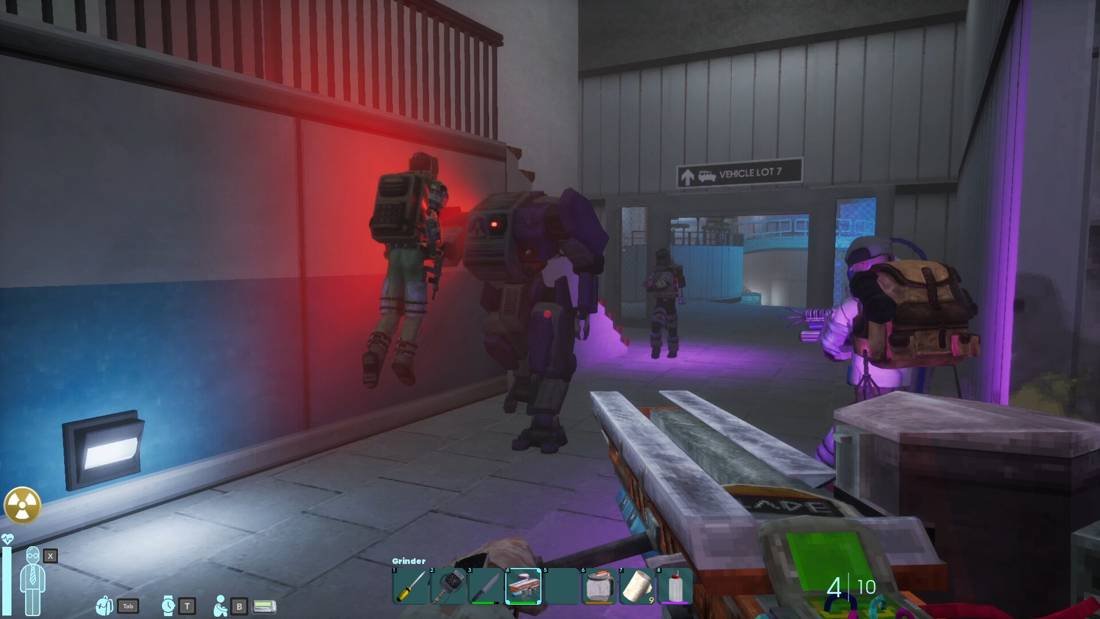
Screenshots and artwork are promotional images from the Abiotic Factor Steam store page and belong to Deep Field Games and Playstack.
Other guides from this collection.
Games with a similar profile to Abiotic Factor are listed below, chosen by shared genre and closeness of graphics demand. Open one to see how its requirements and FPS compare.
On Steam the game sits at Overwhelmingly Positive: 96% positive across 29,357 reviews at the time of checking (2026-11-02). Larger communities tend to share more settings guides and fixes.
It was out for around 16 months when we wrote this guide, so expect patches and driver updates to move the numbers a little over time.
Details here come from Steam's public store listing. We have not tested the game on every card, so frame rates on this page are modelled figures.
A short, honest note on how the numbers are produced.
For Abiotic Factor the demand score of 49 comes from the recommended GPU, the CPU score of 32 from an assumed processor line, and the VRAM figure of 6 GB at 1080p High is estimated from the demand score.
The model divides a card's performance score by the game demand, scaled for resolution, preset and DLSS, FSR or XeSS-style upscaling, with a penalty when memory runs short and a ceiling set by a fast reference processor.
These are modelled figures, not benchmarks. Real results change with drivers, patches, cooling, the scene you play and your processor. Use the numbers to compare cards and settings, then check them in the game.
Quick answers about Abiotic Factor requirements, GPUs, memory and settings.
Steam names GeForce GTX 1660 or AMD Radeon RX 5600 XT as the minimum GPU and GeForce RTX 3070 or AMD Radeon RX 6700 XT or better as the recommended one. The recommended processor is i5-11th Gen CPU or similar, with memory at 8 GB RAM minimum and 16 GB RAM recommended. Storage needed is 10 GB available space.
Start with the card-by-card verdicts, then run your own parts through the checker. The lowest card we tested at 60 FPS on 1080p High is the RTX 4060.
Aim for the RTX 4060 or better for 1080p at 60 FPS on High; the RTX 5060 is the first current RTX 50 card to manage it.
The RX 7700 XT is the lowest card we tested that holds 60 FPS at 1440p on High, with the RTX 5070 the first RTX 50 option.
Our estimate is roughly 53 FPS at 1080p and 34 FPS at 1440p using the High preset. It has 12 GB of VRAM, which is comfortable for this game at 1440p, so you can usually raise the settings.
Roughly 81 FPS at 1440p on High, rising to around 122 FPS with Quality DLSS, FSR or XeSS-style upscaling. Drivers, the area you play in and your CPU will move that.
For 4K you want a high-end card with upscaling. By our estimates the RTX 5070 is the first desktop RTX 50 card to hit 60 FPS at 4K on High with Quality DLSS, FSR or XeSS-style upscaling.
Expect 6 GB at 1080p, 7.8 GB at 1440p and 10.8 GB at 4K. That leaves 8GB fine for 1080p and tight for 1440p, so keep a margin.
High settings come out at roughly 6 GB, 7.8 GB and 10.8 GB for 1080p, 1440p and 4K. These are derived from the publisher recommended specs.
Steam recommends i5-11th Gen CPU or similar and lists i5-9th Gen CPU or similar as the minimum. By our estimates Core i3-12100F, Ryzen 5 3600, Core i5-12400F, Ryzen 5 5600 and faster can keep a card fed above 60 FPS here.
Steam gives 8 GB RAM as the minimum and 16 GB RAM as recommended. With Windows and a browser or chat app open, 16 GB is a sensible target.
Plan for 10 GB available space of free space. Steam does not state an SSD requirement, but an SSD is recommended for loading times.
At typical wattage, RTX 5070 Laptop, RTX 5070 Ti Laptop, RTX 5080 Laptop, RTX 5090 Laptop reach 60 FPS at 1080p on High by our model. Power limit and cooling decide how close a real laptop gets.
Start on High, turn on the best DLSS, FSR or XeSS-style upscaling mode the game offers, then lower the heaviest settings such as shadows and volumetric effects. The settings table above gives a starting point for several cards.
It lands on 49 in our graphics demand scale (ahead of 96% of 937 games), a very demanding result. The CPU score of 32 beats 47% of the set.
For multiplayer, a consistent frame rate usually matters more than visual extras. Pick a preset that holds your monitor refresh rate, using the verdict and settings tables as a guide.
Test your own GPU, CPU and settings on this title
Work out settings for the FPS you want
Find out if your graphics memory is enough
Compare every DLSS, FSR or XeSS-style upscaling mode
Put up to three cards side by side
See whether your CPU or GPU is the limit
Independent site. Not affiliated with or endorsed by Deep Field Games, Playstack, Valve, NVIDIA, AMD or Intel. Game names, images and trademarks belong to their owners. Frame rates, VRAM and CPU figures are modelled figures, not benchmarks.