What is the ASUS GeForce GT 1030 and who should consider it?
What type of product is the ASUS GeForce GT 1030 and what does it do?
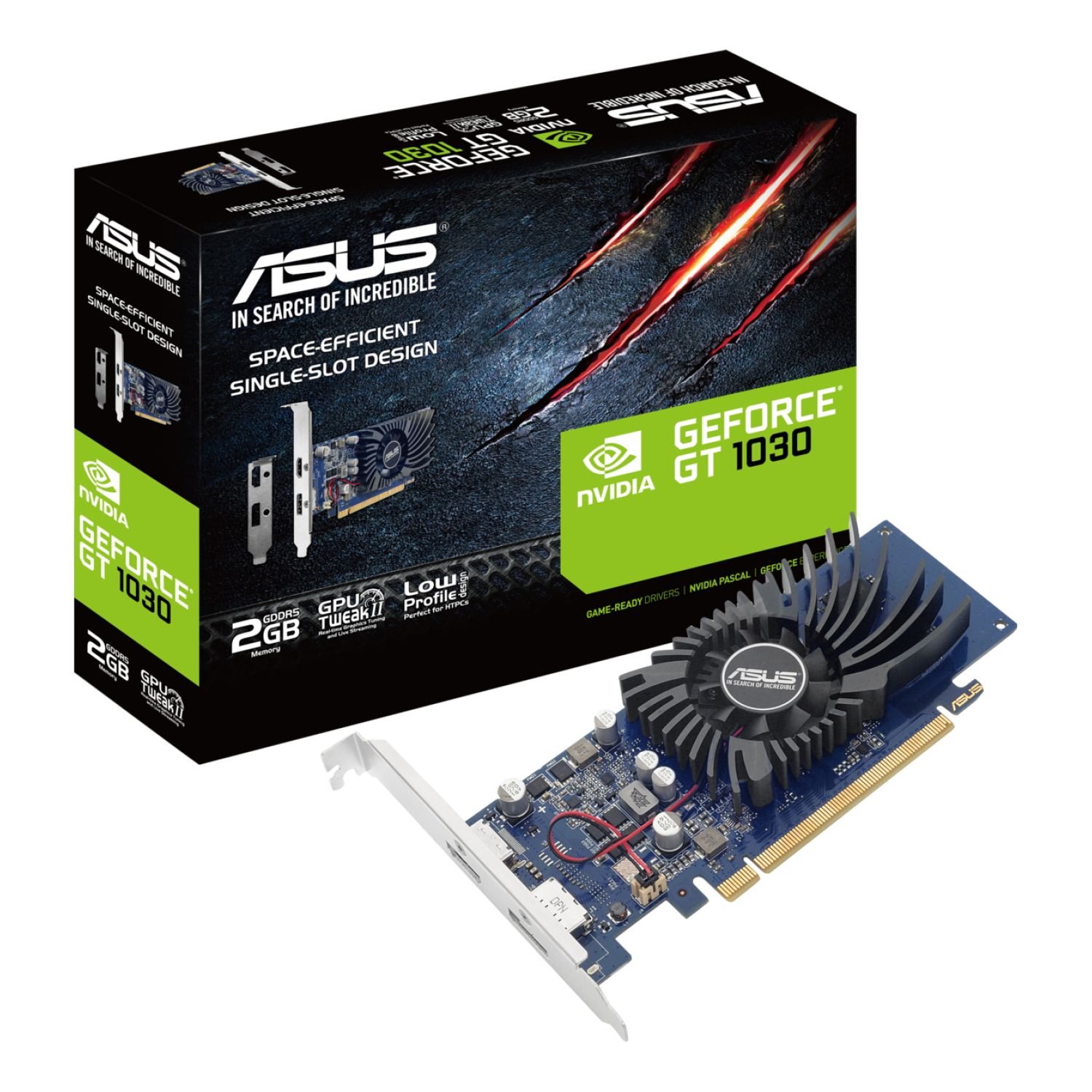
The ASUS GeForce GT 1030 is an external graphics card designed primarily for desktop systems. It functions as a dedicated GPU that offloads graphical processing tasks from the central processor. This card enhances visual performance by accelerating rendering of images, videos, and graphical interfaces. It is especially useful for improving video playback quality, enabling light gaming, and supporting multi-monitor setups. The product is marketed as a low-profile graphics card, meaning it is slim and compact, suitable for smaller cases and specialised builds such as Home Theatre PCs (HTPCs).
Who is the ASUS GeForce GT 1030 designed for?
This graphics card is suitable for users who require an upgrade from integrated graphics solutions but do not need the power of high-end gaming GPUs. Typical users include casual gamers, media enthusiasts, and professionals who need enhanced graphical output for everyday computing tasks. It is also ideal for those building compact HTPC systems where space is limited and quiet operation is preferable. Users looking to add a second or third monitor for productivity or entertainment purposes may find this product a practical choice.
When should someone use the ASUS GeForce GT 1030?
The ASUS GeForce GT 1030 should be used when a computer’s existing graphics capabilities are insufficient for the intended tasks. Situations include when integrated graphics cannot smoothly handle HD video playback, when basic 3D gaming is desired, or when additional display outputs are needed. It is also appropriate for users upgrading older desktops without dedicated graphics cards to improve visual performance without investing in high-end hardware. The low-profile form factor means it is particularly useful in small form factor builds where space and cooling options are constrained.
What are the build, materials, and technical aspects of the ASUS GeForce GT 1030?
What materials and build quality does the ASUS GeForce GT 1030 feature?
Specific materials used in the ASUS GeForce GT 1030’s construction are not detailed by the manufacturer. However, the card is housed in a low-profile PCB (printed circuit board) design with a compact cooling solution. The cooling system typically comprises a small fan and heatsink combination, engineered for quiet operation and sufficient heat dissipation in low-power usage scenarios. The external casing and components are designed to fit into slim desktop cases, prioritising space efficiency and durability. The overall build aims to balance performance with thermal management in a compact footprint.
What are the dimensions and form factor of the ASUS GeForce GT 1030?
Precise dimensions of the ASUS GeForce GT 1030 are not specified. Nonetheless, it is categorised as a low-profile graphics card, indicating a height and length significantly reduced compared to standard full-height GPUs. This form factor generally measures approximately 2.7 inches (69mm) in height, making it compatible with small form factor cases and HTPC chassis. The card uses a single-slot design, meaning it occupies only one expansion slot inside a PC, leaving room for other components or cards.
What compatibility considerations apply to the ASUS GeForce GT 1030?
The ASUS GeForce GT 1030 is compatible with desktop motherboards featuring a PCI Express x16 slot. It supports PCIe 3.0 standards but is backward compatible with PCIe 2.0 slots, ensuring broad compatibility with a wide range of systems. The card requires a system with sufficient power supply capacity, typically drawing power directly from the PCIe slot without the need for additional power connectors, reflecting its low power consumption. Compatibility with operating systems includes major Windows versions such as Windows 10 and Windows 11. Specific Linux support is not detailed but GeForce cards generally have driver support on popular distributions.
What are the main features and practical uses of the ASUS GeForce GT 1030?
What are the key features of the ASUS GeForce GT 1030?
- Feature: Low-profile design
- Why it matters: Allows installation in compact PC cases where space is limited, like HTPCs or small form factor desktops.
- Best for: Users building slim PCs or upgrading small cases without needing a bulky GPU.
- Feature: 2GB GDDR5 memory
- Why it matters: Provides adequate video memory for smooth playback of high-definition video and basic gaming performance.
- Best for: Casual gamers and media consumers who do not require large memory buffers for intensive graphical tasks.
- Feature: External graphics card format
- Why it matters: Being an external add-on, it offers a flexible upgrade path for systems lacking integrated dedicated graphics.
- Best for: Users upgrading older machines or entry-level desktops to enhance graphics capabilities.
- Feature: Quiet cooling system
- Why it matters: Ensures the card operates with low noise levels, which is important for media centres or quiet working environments.
- Best for: HTPC users and office environments where noise reduction is a priority.
What practical benefits does the ASUS GeForce GT 1030 offer?
The key benefit of the ASUS GeForce GT 1030 is its ability to significantly improve visual performance over integrated graphics solutions. Users experience smoother video playback, reduced stuttering in multimedia applications, and the capability to run older or less demanding games at playable frame rates. The low-profile design makes it a practical choice for small cases, enabling users to build or upgrade systems in compact spaces without sacrificing graphical output. Its low power consumption helps maintain energy efficiency and reduces heat output, contributing to quieter and cooler system operation.
What realistic use cases suit the ASUS GeForce GT 1030?
The card is well-suited for upgrading office PCs to add multi-monitor support or improve video playback for presentations and media editing. It can be used in HTPC builds to provide 4K video decoding and smooth streaming capabilities. Casual gamers can enjoy titles that do not require high-end graphics hardware, such as eSports games or older 3D titles. Additionally, it serves as a cost-effective entry point into discrete graphics for users who need better visuals but have budget constraints or limited case space.
What limitations should users be aware of with the ASUS GeForce GT 1030?
The ASUS GeForce GT 1030 is not designed for high-end gaming or professional graphics applications such as 3D rendering or video production. Its 2GB of GDDR5 memory limits performance with graphically intensive games or large textures. The low-profile form factor restricts the cooling capacity and power delivery, meaning it cannot handle sustained heavy workloads without thermal throttling. It also lacks advanced features found in higher-tier GPUs, such as ray tracing or large-scale parallel processing capabilities. Users requiring top-tier performance should consider more powerful graphics cards.
Who is the ASUS GeForce GT 1030 ideal for, and what should buyers consider before purchase?
Who is the ideal customer for the ASUS GeForce GT 1030?
Ideal customers include home users upgrading from integrated graphics, individuals building compact HTPC systems, and office workers needing enhanced graphics for multi-display setups or video tasks. It also appeals to budget-conscious gamers who play less demanding titles or older games. Users prioritising quiet operation and low power consumption will find this card fitting. Additionally, those with small form factor or legacy desktop cases benefit from its low-profile design and modest power requirements.
Who might the ASUS GeForce GT 1030 not suit?
This graphics card is not suitable for hardcore gamers, professional content creators, or users running graphically intensive applications like modern AAA games, 3D modelling software, or video editing suites requiring high GPU horsepower. Those needing multiple high-resolution monitors with advanced features might find this card insufficient. Users expecting to play the latest games at high settings or resolutions should look towards mid-range or high-end graphics cards instead.
What key factors should buyers check before purchasing the ASUS GeForce GT 1030?
Buyers should verify that their PC has an available PCI Express x16 slot compatible with the card’s interface. They should confirm that the case can accommodate a low-profile card and that the power supply unit (PSU) provides sufficient wattage and connectors, although additional power connectors are typically not required. Compatibility with the user’s operating system and driver availability must be ensured. It is also advisable to check the number and type of video outputs on the card to match intended monitors. Users should assess whether the performance level meets their specific computing or gaming needs.
What information is available about care, warranty, shipping, and returns for the ASUS GeForce GT 1030?
Information regarding warranty coverage, shipping policies, and returns for the ASUS GeForce GT 1030 is not specified. Typically, graphics cards come with manufacturer warranties ranging from one to three years, subject to the retailer and region. Buyers should consult the retailer’s return policy and ASUS’s official support channels for detailed warranty terms and support options. Proper care involves ensuring adequate cooling in the PC case, keeping the card free from dust, and using compatible drivers to maintain system stability. Shipping details depend on the seller and shipping destination within the United Kingdom.





Reviews
There are no reviews yet.