Can my PC run it?
Get a verdict for your hardware in this game
Looking at The Alters, an Adventure game from 11 bit studios. We work through the official specs, estimate frame rates on 28 graphics cards, size up the VRAM and processor needs and suggest settings and laptop options.

Where it lands among 937 modelled titles, with a look at what that means for each class of card.
With a demand score of 35, The Alters asks more of a graphics card than 90% of the 937 games in our list. We call that demanding.
It comes from the recommended card on the Steam page (RX 6600 XT), which we map onto a common performance scale and convert to 1080p High. Treat it as a relative guide.
For the processor we score The Alters at 30, which is above 43% of our data set.
Official minimum and recommended specs for The Alters, translated into frame rates.
Published by the developer on Steam and subject to change with patches.
The minimum card, RX 570, is the floor Steam sets. In our model it delivers roughly 50 FPS at 1080p on Low settings, and 28 FPS if you push it to High.
Step up to the recommended RX 6600 XT and the model returns roughly 68 FPS at 1080p and 44 FPS at 1440p. That is above 60 FPS at 1080p, so the recommended spec reads as a comfortable 1080p target.
On the CPU side the recommended entry is AMD Ryzen 7 5800X, which our model rates at roughly 103 FPS of frame preparation for The Alters.
Memory is listed as 16 GB RAM at minimum and 16 GB RAM recommended, with 50 GB available space needed on disk.
From a 30 FPS floor to 4K, here is the card each target asks for in The Alters.
| Target | Lowest card tested | First RTX 50 card | Also reaches it |
|---|---|---|---|
| Playable, 30 FPS at 1080p Low | GTX 1060 6GB | RTX 5050 | GTX 1660 Super, RTX 2060, RX 6600 |
| 1080p 60 FPS, Medium | GTX 1660 Super | RTX 5050 | RTX 2060, RX 6600, RTX 3060 12GB |
| 1080p 60 FPS, High | RTX 2060 | RTX 5050 | RX 6600, RTX 3060 12GB, RX 7600 |
| 1440p 60 FPS, High | Arc B580 | RTX 5060 | RTX 5060, RTX 4060 Ti 8GB, RTX 3070 |
| 1440p 100 FPS, High | RX 7800 XT | RTX 5070 | RTX 4070 Super, RTX 5070, RX 9070 |
| 4K 60 FPS, High with upscaling | RTX 5060 Ti 16GB | RTX 5060 Ti 16GB | RX 7700 XT, RTX 4070, RTX 3080 10GB |
| 4K 60 FPS, Ultra with upscaling | RX 7700 XT | RTX 5070 | RTX 4070, RTX 3080 10GB, RX 7800 XT |
Our estimates put 1080p 60 FPS on High within reach of the RTX 2060 and above, with the RTX 5050 as the cheapest RTX 50 route there.
For a smooth 1440p on High you want at least the Arc B580. Within the RTX 50 range that means the RTX 5060 or above.
At 4K, expect to lean on upscaling. The RTX 5060 Ti 16GB is the first desktop RTX 50 card to achieve 60 FPS on High once Quality upscaling is switched on.
NVIDIA, AMD and Intel cards all appear in the list. Add your own processor, memory and settings in the can my PC run it checker, or see whether your processor limits you in the bottleneck checker.
Projected frame rates for 28 graphics cards from NVIDIA, AMD and Intel. Pick a resolution to redraw the bars.
The fastest card here, the RTX 5090, returns around 259 FPS at 1440p and 149 FPS at 4K. The RTX 5050 sits at roughly 52 FPS at 1440p, which shows how wide the range is in The Alters.
| Graphics card | 1080p | 1440p | 4K | 1440p upscaled | 4K upscaled |
|---|---|---|---|---|---|
| RTX 5090 32 GB | 270 | 259 | 149 | 270 | 223 |
| RTX 4090 24 GB | 270 | 199 | 114 | 270 | 171 |
| RTX 5080 16 GB | 253 | 163 | 94 | 245 | 141 |
| RX 7900 XTX 24 GB | 247 | 159 | 91 | 239 | 137 |
| RTX 4080 Super 16 GB | 238 | 153 | 88 | 230 | 132 |
| RTX 5070 Ti 16 GB | 216 | 139 | 80 | 209 | 120 |
| RX 9070 XT 16 GB | 216 | 139 | 80 | 209 | 120 |
| RTX 4070 Ti Super 16 GB | 204 | 131 | 75 | 197 | 113 |
| RX 9070 16 GB | 191 | 123 | 71 | 185 | 106 |
| RTX 5070 12 GB | 185 | 119 | 69 | 179 | 103 |
| RTX 4070 Super 12 GB | 176 | 113 | 65 | 170 | 98 |
| RX 7800 XT 16 GB | 170 | 109 | 63 | 164 | 94 |
| RTX 3080 10GB 10 GB | 154 | 100 | 57 | 149 | 86 |
| RTX 4070 12 GB | 148 | 96 | 55 | 143 | 82 |
| RX 7700 XT 12 GB | 142 | 92 | 53 | 137 | 79 |
| RTX 5060 Ti 16GB 16 GB | 130 | 84 | 48 | 125 | 72 |
| RTX 3070 8 GB | 117 | 76 | 36 | 113 | 59 |
| RTX 4060 Ti 8GB 8 GB | 111 | 72 | 34 | 108 | 56 |
| RTX 5060 8 GB | 108 | 70 | 34 | 105 | 54 |
| Arc B580 12 GB | 102 | 66 | 38 | 99 | 57 |
| RTX 4060 8 GB | 93 | 60 | 29 | 90 | 47 |
| RTX 5050 8 GB | 80 | 52 | 25 | 78 | 40 |
| RX 7600 8 GB | 80 | 52 | 25 | 78 | 40 |
| RTX 3060 12GB 12 GB | 74 | 48 | 27 | 72 | 41 |
| RX 6600 8 GB | 68 | 44 | 21 | 66 | 34 |
| RTX 2060 6 GB | 62 | 35 | 12 | 57 | 20 |
| GTX 1660 Super 6 GB | 52 | 30 | 11 | 49 | 17 |
| GTX 1060 6GB 6 GB | 34 | 19 | 7 | 31 | 11 |
Every figure assumes the High preset with a fast processor. The last two columns use Quality DLSS, FSR or XeSS-style upscaling (DLSS, FSR or XeSS, if the game offers it). Results over 360 FPS appear as 360+. For a head-to-head, open the GPU comparison tool.
A verdict in plain English for twelve popular graphics cards.
| Graphics card | 1080p | 1440p | 4K | Verdict |
|---|---|---|---|---|
| GTX 1060 6GB | 34 | 19 | 7 | Only about 34 FPS at 1080p on High, so settle for lower presets. |
| RTX 2060 | 62 | 35 | 12 | Comfortable at 1080p (62 FPS), but 1440p drops to 35 FPS. |
| RTX 3060 12GB | 74 | 48 | 27 | Native 1440p gives 48 FPS, and Quality upscaling brings it to about 72 FPS. |
| RTX 4060 | 93 | 60 | 29 | A 1440p card with upscaling on, at roughly 90 FPS, while 1080p is easy (93 FPS). |
| RTX 5060 | 108 | 70 | 34 | Holds about 70 FPS at 1440p on High, which is smooth for most screens. |
| RTX 5060 Ti 16GB | 130 | 84 | 48 | Needs upscaling for 4K: about 72 FPS with Quality upscaling, 48 FPS without. |
| RTX 5070 | 185 | 119 | 69 | Comfortable at 4K on High, around 69 FPS before any upscaling. |
| RX 7800 XT | 170 | 109 | 63 | Holds roughly 63 FPS at 4K, so resolution is not the limit. |
| RTX 5070 Ti | 216 | 139 | 80 | Native 4K works here at about 80 FPS, with no upscaling needed. |
| RTX 5080 | 253 | 163 | 94 | Native 4K works here at about 94 FPS, with no upscaling needed. |
| RTX 4090 | 270 | 199 | 114 | Comfortable at 4K on High, around 114 FPS before any upscaling. |
| RTX 5090 | 270 | 259 | 149 | Native 4K works here at about 149 FPS, with no upscaling needed. |
Think of the verdict column as a starting point. It judges every card on High settings, so a modest result can often be improved by dropping one preset or using upscaling.
The step from an RTX 5060 (70 FPS at 1440p) to an RTX 5070 (119 FPS) is roughly 71% by our model, a useful yardstick when choosing between the two.
Settings that hold 60 FPS at 1080p, 1440p and 4K, worked out for this game.
1080p is straightforward on RTX 3060 12GB, RTX 4060, RTX 5060, which hold 60 FPS on High natively here, so you only need DLSS, FSR or XeSS-style upscaling for extra smoothness.
Use the table as a starting point: it shows the highest preset that still manages 60 FPS for each card at 1080p.
| Card | Best preset | Upscaling | Est. FPS |
|---|---|---|---|
| GTX 1660 Super | Ultra | Quality upscaling | 61 |
| RTX 3060 12GB | Ultra | Quality upscaling | 85 |
| RTX 4060 | Ultra | Native | 71 |
| RTX 5060 | Ultra | Native | 83 |
Native 1440p works on RTX 5060, RTX 5070, RTX 5070 Ti, all above 60 FPS on High by our model. Upscaling then becomes optional rather than required.
Start from the preset that still manages 60 FPS, then raise one setting at a time. The table gives the best preset for each card.
| Card | Best preset | Upscaling | Est. FPS |
|---|---|---|---|
| RTX 4060 | Ultra | Quality upscaling | 69 |
| RTX 5060 | Ultra | Quality upscaling | 80 |
| RTX 5070 | Ultra | Native | 92 |
| RTX 5070 Ti | Ultra | Native | 107 |
For 4K play, RTX 5070 Ti, RTX 4080 Super, RTX 5080 clear 60 FPS on High without any upscaling by our estimates, which leaves room to raise individual settings.
Each row below is the best-looking combination that still holds 60 FPS at 4K by our model.
| Card | Best preset | Upscaling | Est. FPS |
|---|---|---|---|
| RTX 5070 Ti | Ultra | Native | 62 |
| RTX 4080 Super | Ultra | Native | 68 |
| RTX 5080 | Ultra | Native | 72 |
| RTX 5090 | Ultra | Native | 114 |
How much faster each next RTX 50 card is at 1440p on High settings.
| Step | Before (1440p FPS) | After (1440p FPS) | Gain |
|---|---|---|---|
| RTX 5050 to RTX 5060 | 52 | 70 | +35% |
| RTX 5060 to RTX 5060 Ti 16GB | 70 | 84 | +20% |
| RTX 5060 Ti 16GB to RTX 5070 | 84 | 119 | +43% |
| RTX 5070 to RTX 5070 Ti | 119 | 139 | +17% |
| RTX 5070 Ti to RTX 5080 | 139 | 163 | +17% |
| RTX 5080 to RTX 5090 | 163 | 259 | +59% |
Moving from the RTX 5080 to the RTX 5090 adds roughly 59% at 1440p, the largest jump in the RTX 50 range for The Alters. The RTX 5070 to RTX 5070 Ti step adds only roughly 17%.
Prices usually climb faster than performance across the range. In The Alters that means the best value often sits in the middle rather than at the top.
Compare options directly in the upgrade value calculator or the GPU price to performance calculator.
Estimated graphics memory use on High settings. Too little VRAM hurts smoothness whatever the GPU speed.
| Your VRAM | 1080p Low | 1080p High | 1440p High | 4K High |
|---|---|---|---|---|
| 6 GB | Fine | Fine | Not enough | Not enough |
| 8 GB | Fine | Fine | Fine | Not enough |
| 12 GB | Fine | Fine | Fine | Fine |
| 16 GB | Fine | Fine | Fine | Fine |
| 24 GB | Fine | Fine | Fine | Fine |
Expect roughly 5 GB of VRAM at 1080p, 6.5 GB at 1440p and 9.0 GB at 4K on High. Remember that this is an estimate derived from the recommended graphics card.
If memory is tight, lower textures first: Medium brings the 1440p figure down to roughly 5.5 GB.
Test other settings in the VRAM calculator and read how much VRAM you need for gaming.
Which processors keep a fast graphics card busy in this game.
| Processor | Max FPS it can feed | Good for 100+ FPS? |
|---|---|---|
| Ryzen 7 9800X3D | 310 | Yes |
| Ryzen 7 7800X3D | 270 | Yes |
| Core i7-14700K | 232 | Yes |
| Core i5-14600K | 211 | Yes |
| Ryzen 5 7600 | 200 | Yes |
| Ryzen 5 5600 | 157 | Yes |
| Core i5-12400F | 148 | Yes |
| Ryzen 5 3600 | 113 | Yes |
| Core i3-12100F | 113 | Yes |
On the processor side Steam asks for AMD Ryzen 5 1600 at minimum and AMD Ryzen 7 5800X recommended. Below, each CPU is scored for the frame rate it can feed in The Alters.
The Alters is a mid-weight game for processors, ahead of 43% of those we model, so a recent mid-range chip is a sound match.
The Core i5-12400F caps at roughly 148 FPS in The Alters by our model. Beyond that frame rate the CPU, not the card, sets the pace.
Test your own pairing in the bottleneck checker and read system bottlenecks guide.
Seven real CPU and GPU combinations, and which part limits each one.
| Build | 1080p | 1440p | Limited by (1440p) |
|---|---|---|---|
| RTX 4060 with Core i3-12100F | 93 | 60 | Graphics card |
| RTX 5060 with Ryzen 5 5600 | 108 | 70 | Graphics card |
| RTX 5060 Ti 16GB with Core i5-12400F | 130 | 84 | Graphics card |
| RTX 5070 with Ryzen 5 7600 | 185 | 119 | Graphics card |
| RTX 5070 Ti with Core i5-14600K | 211 | 139 | Graphics card |
| RTX 5080 with Ryzen 7 7800X3D | 253 | 163 | Graphics card |
| RTX 5090 with Ryzen 7 9800X3D | 310 | 259 | Graphics card |
In The Alters none of the seven builds is held back by its processor at 1440p, which means the graphics card decides the frame rate across the board.
Our model finds RTX 5090 plus Ryzen 7 9800X3D the most evenly matched build here: roughly 310 FPS from the processor against roughly 259 FPS from the card at 1440p.
Use the table to see how balance changes, then enter your real parts in the bottleneck checker for a personal answer.
What Steam lists for memory and disk space, and what it means in practice.
The publisher lists 16 GB RAM of memory as the minimum and 16 GB RAM as recommended. In real use, with everything else running, 16 GB is enough for most people.
On disk, plan for roughly 50 GB free. At 100 Mbps with typical overhead that is roughly 1 h 18 min to download, or roughly 16 min at 500 Mbps.
On drives: an SSD is called for on the Steam page, so use one.
Work out your total in the RAM calculator, which counts Windows, background apps and streaming on top of the game. Check how long the install takes with the download time calculator.
A starting point for several popular cards. Each cell is the highest preset that still manages 60 FPS.
| Graphics card | 1080p at 60 FPS | 1440p at 60 FPS | 4K at 60 FPS |
|---|---|---|---|
| RTX 3060 12GB | UltraQuality upscaling, ~85 FPS | UltraBalanced upscaling, ~64 FPS | MediumBalanced upscaling, ~64 FPS |
| RTX 4060 | Ultranative, ~71 FPS | UltraQuality upscaling, ~69 FPS | MediumQuality upscaling, ~69 FPS |
| RTX 5060 | Ultranative, ~83 FPS | UltraQuality upscaling, ~80 FPS | HighBalanced upscaling, ~63 FPS |
| RTX 5070 | Ultranative, ~142 FPS | Ultranative, ~92 FPS | UltraQuality upscaling, ~79 FPS |
| RTX 5070 Ti | Ultranative, ~166 FPS | Ultranative, ~107 FPS | Ultranative, ~62 FPS |
| RX 7800 XT | Ultranative, ~131 FPS | Ultranative, ~84 FPS | UltraQuality upscaling, ~73 FPS |
Each cell shows the highest preset that still manages 60 FPS in The Alters, with the upscaling mode it needs.
Settings assume the game offers an upscaler; check the graphics menu. Want a tailored answer? Open the best settings generator and compare DLSS, FSR or XeSS-style upscaling modes in the DLSS and frame generation estimator.
Modelled laptop results at the power limits laptops usually ship with.
| Laptop GPU | Typical power | 1080p High | 1440p High |
|---|---|---|---|
| RTX 5050 Laptop 8 GB | 70 W | 55 | 36 |
| RTX 5060 Laptop 8 GB | 80 W | 78 | 50 |
| RTX 5070 Laptop 8 GB | 85 W | 89 | 57 |
| RTX 5070 Ti Laptop 12 GB | 100 W | 111 | 72 |
| RTX 5080 Laptop 16 GB | 115 W | 142 | 92 |
| RTX 5090 Laptop 24 GB | 125 W | 185 | 119 |
Among RTX 50 laptop GPUs, RTX 5060 Laptop, RTX 5070 Laptop, RTX 5070 Ti Laptop, RTX 5080 Laptop, RTX 5090 Laptop clear 60 FPS at 1080p on High at typical wattage, with RTX 5070 Ti Laptop, RTX 5080 Laptop, RTX 5090 Laptop also holding 60 FPS at 1440p.
A laptop GPU is only as fast as the power and cooling its maker allows. Look for the TGP in the spec sheet before relying on any estimate.
Explore different TGP values in the laptop TGP estimator.
General guidance for this kind of game, chosen from the Steam genres and features.
Treat these as rules of thumb for games of this type. They come from the genres on the Steam page, not from testing The Alters directly.
A look at The Alters from the official Steam gallery. Visual detail is what you trade away when you drop presets, so it helps to see what you are keeping.
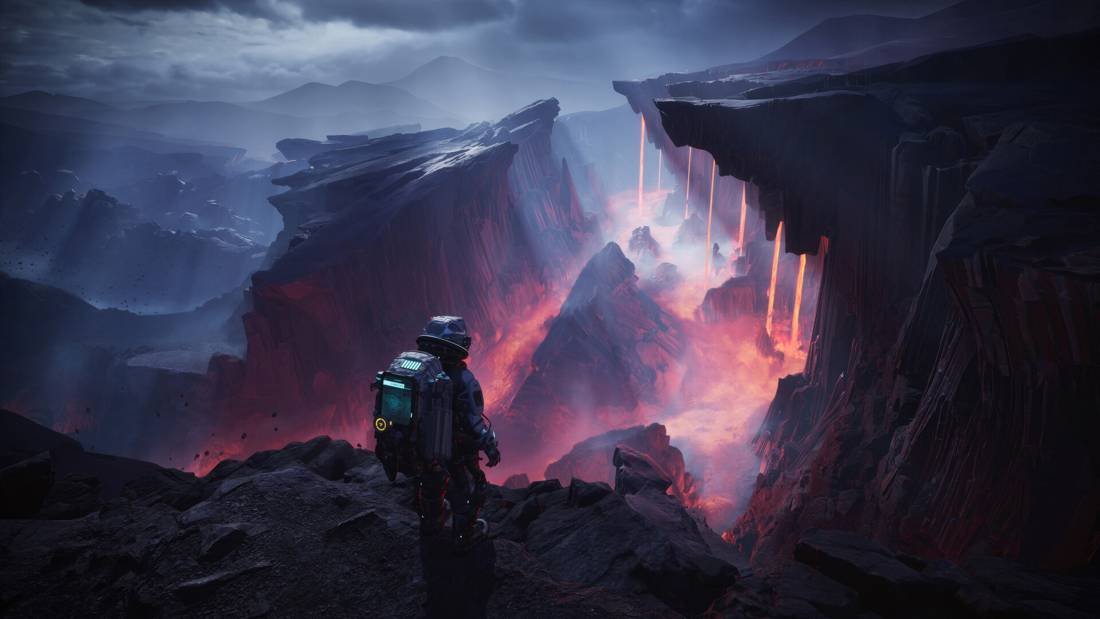
Screenshots and artwork are promotional images from the The Alters Steam store page and belong to 11 bit studios.
Other guides from this collection.
These guides sit closest to The Alters in our data, either because they share genres or because they are about as hard to run. The demand scores use one common scale.
At the time we checked (2026-11-02) Steam showed 6,196 reviews with a Very Positive rating and 88% positive. That is a useful signal for how widely played The Alters is.
It was out for roughly 17 months when we wrote this guide, so expect patches and driver updates to move the numbers a little over time.
Details here come from Steam's public store listing. We have not tested the game on every card, so frame rates on this page are modelled figures.
A short, honest note on how the numbers are produced.
Here is what feeds the estimates: demand 35 from the recommended card, CPU score 30 (from the listed processor line), and a 1080p High VRAM figure of 5 GB (estimated from the demand score).
Frame rates scale each graphics card against that demand, then adjust for resolution, preset, upscaling and a memory penalty when a card runs short of VRAM. CPU limits cap the result using a fast reference processor in the GPU tables.
Nothing on this page is a measured benchmark. Expect real frame rates to differ with drivers, updates and your own system, and treat the tables as a guide.
Short answers to the most common questions about running The Alters on PC.
Steam gives AMD Radeon RX 570, NVIDIA GeForce GTX 1060, Intel Arc A570. 6+ GB video memory as the minimum graphics card and AMD Radeon RX 6600 XT, NVIDIA GeForce RTX 2070, Intel Arc A770. 8+ GB video memory as the recommended one. The recommended processor is AMD Ryzen 7 5800X, Intel Core i7-8700K, with memory at 16 GB RAM minimum and 16 GB RAM recommended. Storage needed is 50 GB available space.
Start with the card-by-card verdicts, then run your own parts through the checker. The lowest card we tested at 60 FPS on 1080p High is the RTX 2060.
For 60 FPS at 1080p on High you want at least the RTX 2060. Among RTX 50 cards the RTX 5050 is the first to clear it.
At 1440p, 60 FPS on High starts with the Arc B580. In the RTX 50 range that means the RTX 5060 or above.
Expect roughly 80 FPS at 1080p and 52 FPS at 1440p on High. With 8 GB of memory, 1440p is comfortable, so you can usually raise the settings.
In our estimates it manages roughly 119 FPS at 1440p on High, and close to 179 FPS with Quality DLSS, FSR or XeSS-style upscaling. Real results vary with drivers, the scene and your processor.
Treat 4K as an upscaling job. The RTX 5060 Ti 16GB is the first current RTX 50 card to hold 60 FPS at 4K on High with Quality upscaling by our model.
On High settings the model wants roughly 5 GB at 1080p, 6.5 GB at 1440p and 9.0 GB at 4K. An 8GB card is therefore fine at 1080p and fine at 1440p.
The model suggests 5 GB (1080p), 6.5 GB (1440p) and 9.0 GB (4K) on High. The figure is derived from the publisher recommended specs; read it as a guide.
Steam recommends AMD Ryzen 7 5800X, Intel Core i7-8700K and lists AMD Ryzen 5 1600, Intel Core i7-6700 as the minimum. By our estimates Core i3-12100F, Ryzen 5 3600, Core i5-12400F, Ryzen 5 5600 and faster can keep a card fed above 60 FPS here.
Memory runs from 16 GB RAM to 16 GB RAM. Allowing for Windows and everyday apps, 16 GB is a sensible target.
An SSD is called for on the Steam page. Plan for 50 GB available space of free space.
By our estimates these laptop GPUs reach 60 FPS at 1080p on High at typical power limits: RTX 5060 Laptop, RTX 5070 Laptop, RTX 5070 Ti Laptop, RTX 5080 Laptop, RTX 5090 Laptop. Results depend on the power limit (TGP) and cooling.
A sound recipe: High preset, DLSS, FSR or XeSS-style upscaling on, then cut the most demanding settings step by step. The best settings table lists where each card should begin.
Graphics demand is 35 (90% of the 937 modelled games sit below it) and CPU demand is 30 (43% below), so we class it as demanding.
Check the upgrade section: it shows what each step up gains at 1440p in this game, which is the best way to weigh cost against benefit.
Get a verdict for your hardware in this game
Work out settings for the FPS you want
Check this game against your VRAM
Line up all the DLSS, FSR or XeSS-style upscaling and frame generation options
Compare up to three graphics cards
Check for a processor bottleneck
Independent site. Not affiliated with or endorsed by 11 bit studios, 11 bit studios, Valve, NVIDIA, AMD or Intel. Game names, images and trademarks belong to their owners. Frame rates, VRAM and CPU figures are modelled figures, not benchmarks.