Can my PC run it?
Test your own GPU, CPU and settings in this game
Looking at Guilty as Sock!, a Casual and Simulation title from Demon Max. We work through the official specs, estimate frame rates on 28 graphics cards, size up the VRAM and processor needs and suggest settings and laptop options.

Where this game sits among 937 modelled titles, and how that plays out for entry, mid-range and high-end cards.
With a demand score of 4, Guilty as Sock! asks more of a graphics card than 0% of the 937 games in our list. We call that undemanding.
It comes from the minimum card on the Steam page (Integrated Graphics), which we map onto a common performance scale and convert to 1080p High. Treat it as a relative guide.
Processor demand is rated separately: Guilty as Sock! scores 32 on our CPU scale, higher than 47% of the games we model.
Everything Steam lists for Guilty as Sock!, then what it means for real hardware.
Published by the developer on Steam and subject to change with patches.
The minimum card, Integrated Graphics, is the floor Steam sets. In our model it hits about 147 FPS at 1080p on Low settings, and 81 FPS if you push it to High.
Only a minimum requirement is published for Guilty as Sock!. Our figures extrapolate from it, so allow a wider margin for error.
Memory is listed as 8 GB RAM at minimum and 8 GB RAM recommended, with 1 GB available space needed on disk.
The lowest graphics card we tested that delivers each target in Guilty as Sock!, plus the first desktop RTX 50 card that does.
| Target | Lowest card tested | First RTX 50 card | Also reaches it |
|---|---|---|---|
| Playable, 30 FPS at 1080p Low | GTX 1060 6GB | RTX 5050 | GTX 1660 Super, RTX 2060, RX 6600 |
| 1080p 60 FPS, Medium | GTX 1060 6GB | RTX 5050 | GTX 1660 Super, RTX 2060, RX 6600 |
| 1080p 60 FPS, High | GTX 1060 6GB | RTX 5050 | GTX 1660 Super, RTX 2060, RX 6600 |
| 1440p 60 FPS, High | GTX 1060 6GB | RTX 5050 | GTX 1660 Super, RTX 2060, RX 6600 |
| 1440p 100 FPS, High | GTX 1060 6GB | RTX 5050 | GTX 1660 Super, RTX 2060, RX 6600 |
| 4K 60 FPS, High with upscaling | GTX 1060 6GB | RTX 5050 | GTX 1660 Super, RTX 2060, RX 6600 |
| 4K 60 FPS, Ultra with upscaling | GTX 1060 6GB | RTX 5050 | GTX 1660 Super, RTX 2060, RX 6600 |
For 1080p at 60 FPS on High, GTX 1060 6GB is the entry point in our list, with RTX 5050 the first RTX 50 card that clears it.
Moving up to 1440p, the GTX 1060 6GB is the lowest card that holds 60 FPS on High, and the RTX 5050 is the first RTX 50 option.
4K is the hard case. With Quality DLSS, FSR or XeSS-style upscaling enabled, the RTX 5050 is where the RTX 50 range first delivers 60 FPS on High.
The table covers NVIDIA, AMD and Intel cards. For a personal answer with your own CPU and RAM, use the can my PC run it checker or look for a CPU bottleneck with the bottleneck checker.
Modelled FPS for 28 graphics cards from NVIDIA, AMD and Intel. Use the buttons to change resolution.
In our model the RTX 5090 hits about 253 FPS at 1440p and 253 FPS at 4K, while the RTX 5050 manages 253 FPS at 1440p. The spread tells you how much the card matters for Guilty as Sock!.
| Graphics card | 1080p | 1440p | 4K | 1440p upscaled | 4K upscaled |
|---|---|---|---|---|---|
| RTX 5090 32 GB | 253 | 253 | 253 | 253 | 253 |
| RTX 4090 24 GB | 253 | 253 | 253 | 253 | 253 |
| RTX 5080 16 GB | 253 | 253 | 253 | 253 | 253 |
| RX 7900 XTX 24 GB | 253 | 253 | 253 | 253 | 253 |
| RTX 4080 Super 16 GB | 253 | 253 | 253 | 253 | 253 |
| RTX 5070 Ti 16 GB | 253 | 253 | 253 | 253 | 253 |
| RX 9070 XT 16 GB | 253 | 253 | 253 | 253 | 253 |
| RTX 4070 Ti Super 16 GB | 253 | 253 | 253 | 253 | 253 |
| RX 9070 16 GB | 253 | 253 | 253 | 253 | 253 |
| RTX 5070 12 GB | 253 | 253 | 253 | 253 | 253 |
| RTX 4070 Super 12 GB | 253 | 253 | 253 | 253 | 253 |
| RX 7800 XT 16 GB | 253 | 253 | 253 | 253 | 253 |
| RTX 3080 10GB 10 GB | 253 | 253 | 253 | 253 | 253 |
| RTX 4070 12 GB | 253 | 253 | 253 | 253 | 253 |
| RX 7700 XT 12 GB | 253 | 253 | 253 | 253 | 253 |
| RTX 5060 Ti 16GB 16 GB | 253 | 253 | 253 | 253 | 253 |
| RTX 3070 8 GB | 253 | 253 | 253 | 253 | 253 |
| RTX 4060 Ti 8GB 8 GB | 253 | 253 | 253 | 253 | 253 |
| RTX 5060 8 GB | 253 | 253 | 253 | 253 | 253 |
| Arc B580 12 GB | 253 | 253 | 253 | 253 | 253 |
| RTX 4060 8 GB | 253 | 253 | 253 | 253 | 253 |
| RTX 5050 8 GB | 253 | 253 | 253 | 253 | 253 |
| RX 7600 8 GB | 253 | 253 | 253 | 253 | 253 |
| RTX 3060 12GB 12 GB | 253 | 253 | 240 | 253 | 253 |
| RX 6600 8 GB | 253 | 253 | 220 | 253 | 253 |
| RTX 2060 6 GB | 253 | 253 | 200 | 253 | 253 |
| GTX 1660 Super 6 GB | 253 | 253 | 170 | 253 | 253 |
| GTX 1060 6GB 6 GB | 253 | 192 | 110 | 253 | 165 |
All numbers are for High settings paired with a quick CPU. Upscaled columns assume the Quality mode of whichever upscaler the game provides. Anything over 360 FPS is capped at 360+ for display. Put two cards side by side in the GPU comparison tool.
How twelve well-known cards fare, explained simply.
| Graphics card | 1080p | 1440p | 4K | Verdict |
|---|---|---|---|---|
| GTX 1060 6GB | 253 | 192 | 110 | Easy work for this card, which reaches 253 FPS at 1080p. |
| RTX 2060 | 253 | 253 | 200 | Far more than this game needs, with 253 FPS at 1080p in our model. |
| RTX 3060 12GB | 253 | 253 | 240 | Easy work for this card, which reaches 253 FPS at 1080p. |
| RTX 4060 | 253 | 253 | 253 | Far more than this game needs, with 253 FPS at 1080p in our model. |
| RTX 5060 | 253 | 253 | 253 | Comfortably above what the engine is likely to use (253 FPS at 1080p). |
| RTX 5060 Ti 16GB | 253 | 253 | 253 | Comfortably above what the engine is likely to use (253 FPS at 1080p). |
| RTX 5070 | 253 | 253 | 253 | The graphics card is not the limit here: 253 FPS at 1080p before the game or CPU takes over. |
| RX 7800 XT | 253 | 253 | 253 | Comfortably above what the engine is likely to use (253 FPS at 1080p). |
| RTX 5070 Ti | 253 | 253 | 253 | Comfortably above what the engine is likely to use (253 FPS at 1080p). |
| RTX 5080 | 253 | 253 | 253 | The graphics card is not the limit here: 253 FPS at 1080p before the game or CPU takes over. |
| RTX 4090 | 253 | 253 | 253 | Far more than this game needs, with 253 FPS at 1080p in our model. |
| RTX 5090 | 253 | 253 | 253 | Comfortably above what the engine is likely to use (253 FPS at 1080p). |
The table reads the model results as plain advice. Older cards such as the GTX 1060 and RTX 2060 are measured against the same High settings, so a poor result there usually means "drop to Medium", not "cannot run".
In this game the RTX 5070 returns about 253 FPS at 1440p while the RTX 5060 returns 253 FPS, a gap of 0% that deserves a look against price.
Settings that hold 60 FPS at 1080p, 1440p and 4K, worked out for this game.
For 1080p play, GTX 1660 Super, RTX 3060 12GB, RTX 4060 clear 60 FPS on High without any DLSS, FSR or XeSS-style upscaling according to our estimates, which leaves room to raise individual settings.
Use the table as a starting point: it shows the highest preset that still delivers 60 FPS for each card at 1080p.
| Card | Best preset | Upscaling | Est. FPS |
|---|---|---|---|
| GTX 1660 Super | Ultra | Native | 253 |
| RTX 3060 12GB | Ultra | Native | 253 |
| RTX 4060 | Ultra | Native | 253 |
| RTX 5060 | Ultra | Native | 253 |
1440p is straightforward on RTX 4060, RTX 5060, RTX 5070, which hold 60 FPS on High natively here, so you only need DLSS, FSR or XeSS-style upscaling for extra smoothness.
Use the table as a starting point: it shows the highest preset that still delivers 60 FPS for each card at 1440p.
| Card | Best preset | Upscaling | Est. FPS |
|---|---|---|---|
| RTX 4060 | Ultra | Native | 253 |
| RTX 5060 | Ultra | Native | 253 |
| RTX 5070 | Ultra | Native | 253 |
| RTX 5070 Ti | Ultra | Native | 253 |
At 4K, RTX 5070 Ti, RTX 4080 Super, RTX 5080 hold 60 FPS natively on High according to our model, so you can leave DLSS, FSR or XeSS-style upscaling off and spend the headroom on settings.
Pick your card in the table for the preset and DLSS, FSR or XeSS-style upscaling mode that keep 4K above 60 FPS.
| Card | Best preset | Upscaling | Est. FPS |
|---|---|---|---|
| RTX 5070 Ti | Ultra | Native | 253 |
| RTX 4080 Super | Ultra | Native | 253 |
| RTX 5080 | Ultra | Native | 253 |
| RTX 5090 | Ultra | Native | 253 |
What each step up the RTX 50 range adds at 1440p on High settings.
| Step | Before (1440p FPS) | After (1440p FPS) | Gain |
|---|---|---|---|
| RTX 5050 to RTX 5060 | 253 | 253 | +0% |
| RTX 5060 to RTX 5060 Ti 16GB | 253 | 253 | +0% |
| RTX 5060 Ti 16GB to RTX 5070 | 253 | 253 | +0% |
| RTX 5070 to RTX 5070 Ti | 253 | 253 | +0% |
| RTX 5070 Ti to RTX 5080 | 253 | 253 | +0% |
| RTX 5080 to RTX 5090 | 253 | 253 | +0% |
Of the six steps up the RTX 50 range, RTX 5050 to RTX 5060 gives the most in Guilty as Sock! (about 0% at 1440p), while RTX 5050 to RTX 5060 gives the least (about 0%).
Do not overspend for Guilty as Sock!. Past the mid-range the extra graphics power goes unused, and a better processor would help more.
Compare options directly in the upgrade value calculator or the GPU price to performance calculator.
Modelled VRAM use at High settings. Falling short of VRAM causes stutter even with a quick GPU.
| Your VRAM | 1080p Low | 1080p High | 1440p High | 4K High |
|---|---|---|---|---|
| 6 GB | Fine | Fine | Fine | Fine |
| 8 GB | Fine | Fine | Fine | Fine |
| 12 GB | Fine | Fine | Fine | Fine |
| 16 GB | Fine | Fine | Fine | Fine |
| 24 GB | Fine | Fine | Fine | Fine |
The model gives 2 GB at 1080p High, rising to 2.6 GB at 1440p and 3.6 GB at 4K. It is an estimate derived from the recommended graphics card, not a measurement.
If memory is tight, lower textures first: Medium brings the 1440p figure down to roughly 2.2 GB.
Test other settings in the VRAM calculator and see how much VRAM you need for gaming.
Which processors keep a fast graphics card busy in this game.
| Processor | Max FPS it can feed | Good for 100+ FPS? |
|---|---|---|
| Ryzen 7 9800X3D | 291 | Yes |
| Ryzen 7 7800X3D | 253 | Yes |
| Core i7-14700K | 218 | Yes |
| Core i5-14600K | 197 | Yes |
| Ryzen 5 7600 | 187 | Yes |
| Ryzen 5 5600 | 147 | Yes |
| Core i5-12400F | 139 | Yes |
| Ryzen 5 3600 | 106 | Yes |
| Core i3-12100F | 106 | Yes |
Minimum CPU: 1.8GHz Dual-Core CPU. Recommended: 1.8GHz Dual-Core CPU. The table converts processor strength into a ceiling on frames per second for Guilty as Sock!.
The CPU load sits in the middle of our range for Guilty as Sock!, which means a modern mid-range processor will not hold back a typical card.
A Core i5-12400F tops out near 139 FPS in Guilty as Sock! according to our estimates, a handy line to compare against your card.
See whether your parts match in the bottleneck checker and read system bottlenecks guide.
How seven common processor and graphics card pairs behave in this game.
| Build | 1080p | 1440p | Limited by (1440p) |
|---|---|---|---|
| RTX 4060 with Core i3-12100F | 106 | 106 | Processor |
| RTX 5060 with Ryzen 5 5600 | 147 | 147 | Processor |
| RTX 5060 Ti 16GB with Core i5-12400F | 139 | 139 | Processor |
| RTX 5070 with Ryzen 5 7600 | 187 | 187 | Processor |
| RTX 5070 Ti with Core i5-14600K | 197 | 197 | Processor |
| RTX 5080 with Ryzen 7 7800X3D | 253 | 253 | Processor |
| RTX 5090 with Ryzen 7 9800X3D | 291 | 291 | Processor |
Not every pairing is balanced. 7 of the seven below are held back by the processor at 1440p, starting with RTX 4060 plus Core i3-12100F (CPU ceiling near 106 FPS against about 360+ FPS of graphics power).
If you want neither part to idle, RTX 5090 with Ryzen 7 9800X3D comes closest at 1440p, with a CPU ceiling near 291 FPS and a card good for about 360+ FPS.
These pairings are examples, not recommendations to buy. Swap in your own parts with the bottleneck checker to see which side limits you.
RAM and disk space from the Steam page, with a practical view.
For RAM, expect 8 GB RAM at minimum and 8 GB RAM recommended. Allow for the operating system and background apps, which means 16 GB is a sensible floor.
The install asks for roughly 1 GB. Downloading it takes around 2 min at 100 Mbps and about 0 min at 500 Mbps, allowing for overhead.
On drives: Steam does not insist on an SSD, though one will shorten loads.
Add up your own needs in the RAM calculator, which adds your usual background apps to what the game asks for. Time the download with the download time calculator.
A starting point for several popular cards. Each cell is the highest preset that still delivers 60 FPS.
| Graphics card | 1080p at 60 FPS | 1440p at 60 FPS | 4K at 60 FPS |
|---|---|---|---|
| RTX 3060 12GB | Ultranative, ~253 FPS | Ultranative, ~253 FPS | Ultranative, ~185 FPS |
| RTX 4060 | Ultranative, ~253 FPS | Ultranative, ~253 FPS | Ultranative, ~231 FPS |
| RTX 5060 | Ultranative, ~253 FPS | Ultranative, ~253 FPS | Ultranative, ~253 FPS |
| RTX 5070 | Ultranative, ~253 FPS | Ultranative, ~253 FPS | Ultranative, ~253 FPS |
| RTX 5070 Ti | Ultranative, ~253 FPS | Ultranative, ~253 FPS | Ultranative, ~253 FPS |
| RX 7800 XT | Ultranative, ~253 FPS | Ultranative, ~253 FPS | Ultranative, ~253 FPS |
The table gives the best-looking setup that still holds 60 FPS in Guilty as Sock! for each card and resolution.
Settings assume the game offers an upscaler; check the graphics menu. For advice matched to your own PC, use the best settings generator or compare every mode in the DLSS and frame generation estimator.
Estimated FPS on RTX 50 laptop GPUs at typical power limits.
| Laptop GPU | Typical power | 1080p High | 1440p High |
|---|---|---|---|
| RTX 5050 Laptop 8 GB | 70 W | 253 | 253 |
| RTX 5060 Laptop 8 GB | 80 W | 253 | 253 |
| RTX 5070 Laptop 8 GB | 85 W | 253 | 253 |
| RTX 5070 Ti Laptop 12 GB | 100 W | 253 | 253 |
| RTX 5080 Laptop 16 GB | 115 W | 253 | 253 |
| RTX 5090 Laptop 24 GB | 125 W | 253 | 253 |
Laptop results: RTX 5050 Laptop, RTX 5060 Laptop, RTX 5070 Laptop, RTX 5070 Ti Laptop, RTX 5080 Laptop, RTX 5090 Laptop reach 60 FPS at 1080p on High at the power limits we assume, and RTX 5050 Laptop, RTX 5060 Laptop, RTX 5070 Laptop, RTX 5070 Ti Laptop, RTX 5080 Laptop, RTX 5090 Laptop can also do 1440p.
Power limit matters on a laptop: the same GPU name can perform very differently at 60 W and 120 W, and cooling decides how long it holds the higher figure.
Try different wattages in the laptop TGP estimator.
General guidance for this kind of game, chosen from the Steam genres and features.
These are general tips for undemanding games of this type, not claims about how Guilty as Sock! itself is built. Use them as a prompt for what to test.
These promotional screenshots from the Steam page give a feel for the look you are paying for in graphics terms. Use them to judge how much detail the game shows before you tune your settings.
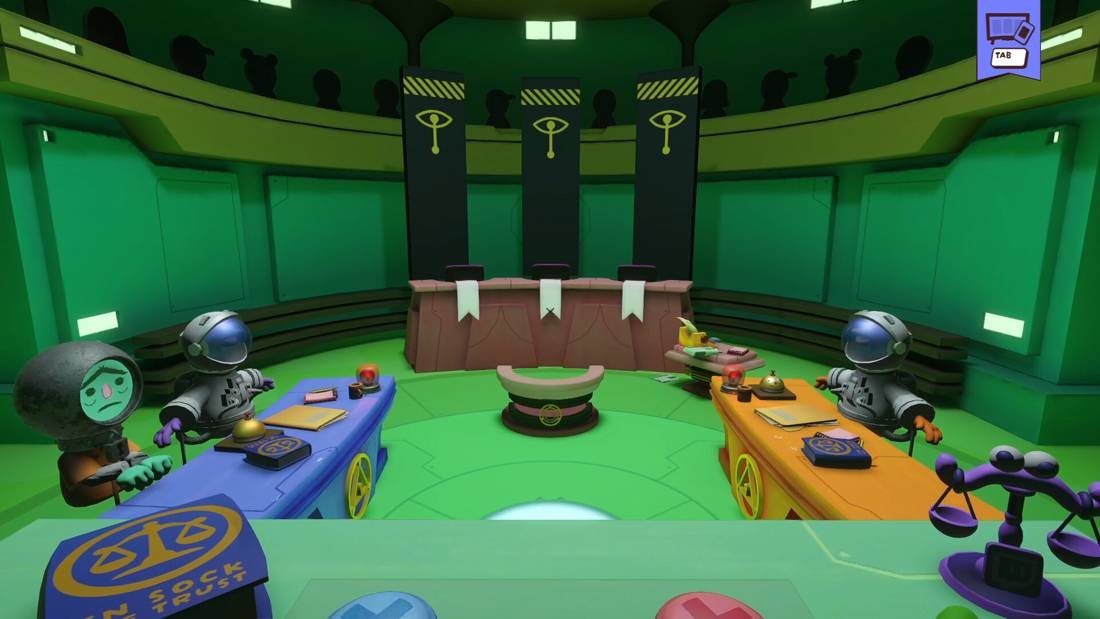
Screenshots and artwork are promotional images from the Guilty as Sock! Steam store page and belong to Demon Max.
Related PC game guides on this site.
If you are comparing Guilty as Sock! with other games, these pages cover titles with a similar hardware appetite or shared genres. Demand scores run on the same scale, so they are directly comparable.
Steam players rate Guilty as Sock! as Very Positive, with 87% of 2,689 reviews positive when we checked on 2026-11-02. Review scores say little about performance, but a large, positive audience means plenty of community advice on settings.
The game is out for about 18 months. Updates from Demon Max and new graphics drivers can both change how it runs, so revisit your settings occasionally.
The facts above are from the public Steam store page. Frame rates here are modelled, since we have not tested the game on every card.
A short, honest note on how the numbers are produced.
For Guilty as Sock! the demand score of 4 comes from the minimum graphics card, the CPU score of 32 from an assumed processor line, and the VRAM figure of 2 GB at 1080p High is estimated from the demand score.
The model divides a card's performance score by the game demand, scaled for resolution, preset and DLSS, FSR or XeSS-style upscaling, with a penalty when memory runs short and a ceiling set by a fast reference processor.
All FPS, VRAM and CPU figures are modelled. They are meant for comparing hardware and settings, and your own testing should have the last word.
Short answers to the most common questions about running Guilty as Sock! on PC.
On the Steam page the entry card is Integrated Graphics and the recommended card is Integrated Graphics, with 1.8GHz Dual-Core CPU as the processor and RAM of 8 GB RAM at minimum (8 GB RAM recommended). Storage needed is 1 GB available space.
Check the table of verdicts and use the checker for your exact CPU, GPU and RAM. In the model, 60 FPS at 1080p on High begins at the GTX 1060 6GB.
By our estimates the GTX 1060 6GB is the lowest card we tested that holds 60 FPS at 1080p on High, and the RTX 5050 is the first desktop RTX 50 card to do so.
Our estimates put the GTX 1060 6GB as the lowest card to achieve 60 FPS at 1440p on High. The first desktop RTX 50 card to do it is the RTX 5050.
The model gives 253 FPS at 1080p and 253 FPS at 1440p on High. Its 8 GB of VRAM is comfortable at 1440p here, which means you can usually raise the settings.
Roughly 253 FPS at 1440p on High, rising to around 253 FPS with Quality DLSS, FSR or XeSS-style upscaling. Drivers, the area you play in and your CPU will move that.
Treat 4K as an DLSS, FSR or XeSS-style upscaling job. The RTX 5050 is the first current RTX 50 card to hold 60 FPS at 4K on High with Quality DLSS, FSR or XeSS-style upscaling according to our model.
On High settings the model wants about 2 GB at 1080p, 2.6 GB at 1440p and 3.6 GB at 4K. An 8GB card is therefore fine at 1080p and fine at 1440p.
Plan on about 2 GB at 1080p, 2.6 GB at 1440p and 3.6 GB at 4K on High. It is derived from the publisher recommended specs, not a measured value.
The recommended processor is 1.8GHz Dual-Core CPU and lists 1.8GHz Dual-Core CPU as the minimum. In the model, Core i3-12100F, Ryzen 5 3600, Core i5-12400F, Ryzen 5 5600 and faster keep a graphics card fed above 60 FPS in this game.
Steam lists 8 GB RAM as the minimum and 8 GB RAM as recommended. With Windows and a browser or chat app open, 16 GB is a sensible target.
Steam does not state an SSD requirement, but an SSD is recommended for loading times. Plan for 1 GB available space of free space.
By our estimates these laptop GPUs reach 60 FPS at 1080p on High at typical power limits: RTX 5050 Laptop, RTX 5060 Laptop, RTX 5070 Laptop, RTX 5070 Ti Laptop, RTX 5080 Laptop, RTX 5090 Laptop. Results depend on the power limit (TGP) and cooling.
Begin on High, switch on DLSS, FSR or XeSS-style upscaling if it is available, and trim the costliest options first. The table in the settings section shows a good place to start for each card.
Our model rates it undemanding: a demand score of 4, higher than 0% of the 937 games, and a CPU score of 32, higher than 47%.
In games with online play a steady frame rate generally helps, so aim for the highest stable figure your monitor can show rather than the prettiest preset. Our tables show where your card sits.
Test your own GPU, CPU and settings in this game
Get the best preset for your target FPS
Check this game against your VRAM
Compare every DLSS, FSR or XeSS-style upscaling mode
Put up to three cards side by side
Find out if your CPU holds you back
Independent site. Not affiliated with or endorsed by Demon Max, Demon Max, Valve, NVIDIA, AMD or Intel. Game names, images and trademarks belong to their owners. Frame rates, VRAM and CPU figures are modelled estimates, not benchmarks.